
In this post: Teach your kids Spanish with these awesome screen-free resources, language learning tools and activities. Post contains affiliate links.
Looking for some screen-free ways to teach your kids Spanish at home? Hands-on resources like games, books, music, and more can help kids learn Spanish vocabulary and pronunciation without relying on screens.
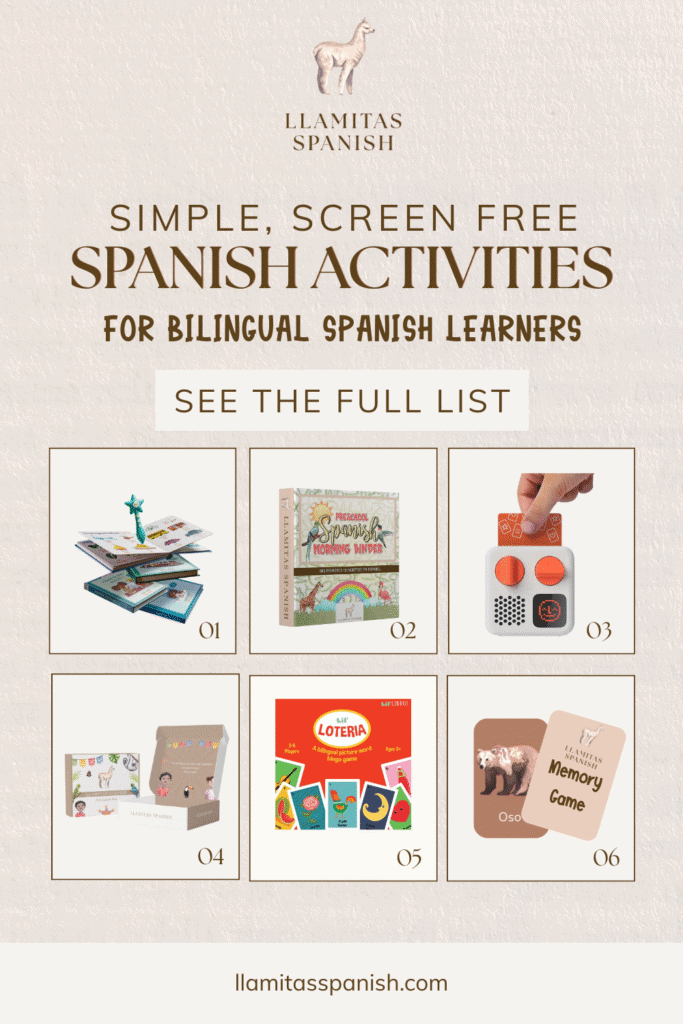
If you’re homeschooling or raising bilingual kids, you won’t want to miss these exciting screen-free Spanish resources.
- Why is screen-free learning important?
Screen-free time has many benefits for kids, including improved creativity, critical thinking, and focus, according to Sarasota Memorial Health Care System. While leveraging screen-time for Spanish learning can be a great strategy, it’s best not to rely on it.
- Is audio input effective for language learning?
Audio input like podcasts, music, and audiobooks is excellent for boosting listening skills and vocabulary development. Focus on comprehensible input with native speaker audio and engaging content that encourages active participation. Here are some tools to help you achieve this:
Table of Contents
Habbi Habbi Bilingual Books for Kids
Habbi Habbi provides beautiful, diverse and interactive bilingual books to support bilingual parenting and education at home.
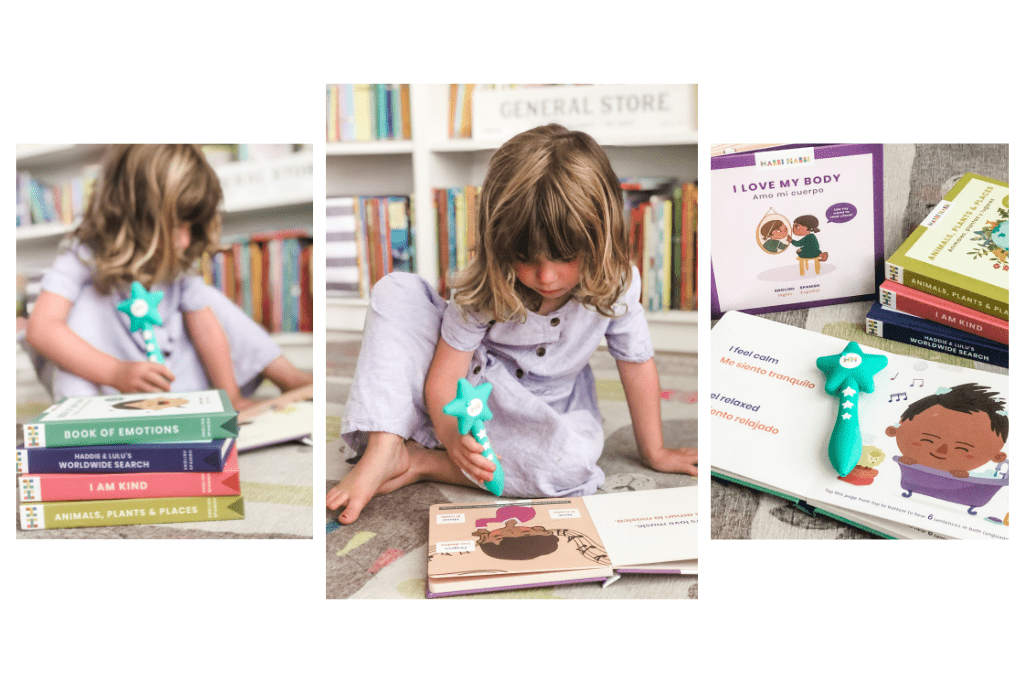
Reading aloud is such a powerful way to learn a language unplugged. Experts state that even just 15 minutes a day of reading aloud helps set your child up for academic success.
But it can be overwhelming for beginners who have little-to-no understanding of how to pronounce the target language words. That’s why these Habbi Habbi bilingual books are such an excellent resource.
These books truly take the stress out of learning a language with the magic of a tappable wand that reads aloud!
The Habbi Habbi Reading Wand brings their books to life, allowing your child to tap on any part of the book to hear words, phrases, or sentences read aloud in the target language.
Whether you have a reluctant reader or you are simply looking for screen-free activities that keep your kids engaged, Habbi Habbi is an investment worth making.
Related Post: The Ultimate Spanish Gift Guide
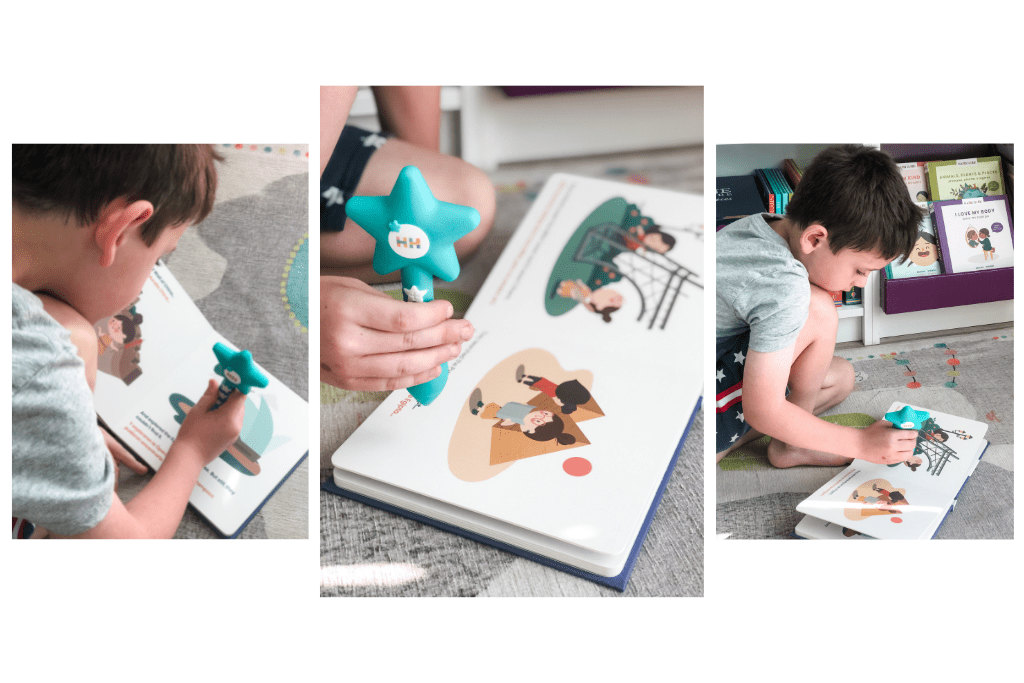
Another aspect of the Habbi Habbi books that really impressed us were the many values that are thoughtfully portrayed in the text and illustrations. From emotions and inclusion to kindness and self care, there are so many important messages within the titles.
The illustrations are diverse, with representation of different cultures and skin-tones being consistent throughout the titles, allowing the characters to reflect a global community.
Related Post: Diverse Books in Spanish
Spanish Morning Binder
Having a gentle introduction to the day with a morning binder helps establish routines and rhythms for language learning.
This Spanish Preschool Binder includes over 180 nature inspired printables and alphabet flashcards. Your child will gain early years Spanish language vocabulary and fine motor skills such as letter tracing, letter recognition, early math and phonics.
The binder is designed to be used with dry erase markers, so you can print once and use it over and over again. Each unit takes just 15–20 minutes to complete.
It is by no means a full curriculum (choose Level 1 for a fully enriched beginners’ curriculum), but it does provide a solid foundation in core Pre-K level vocabulary and skills.
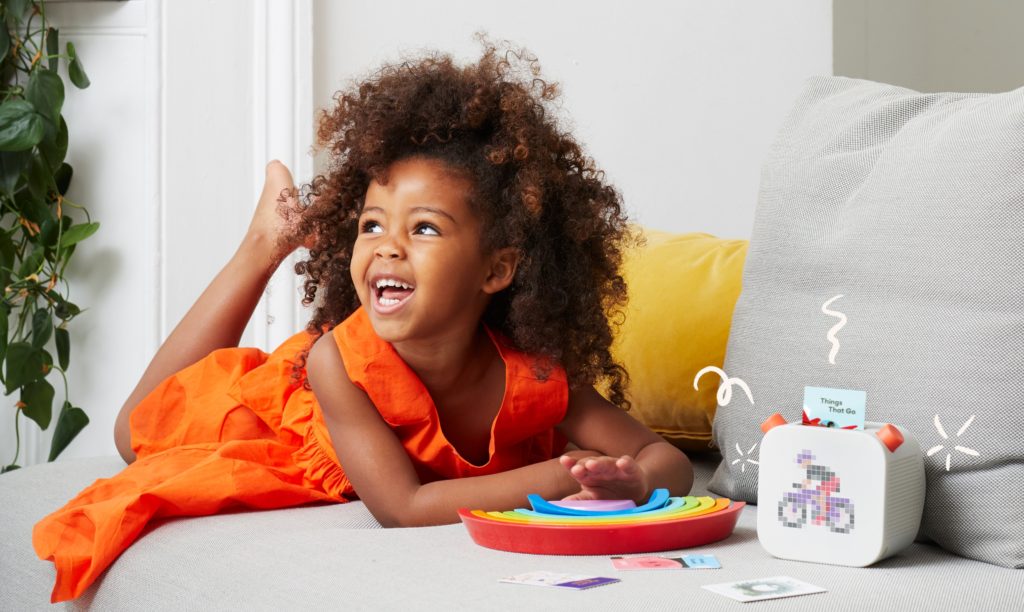
Yoto Player Spanish Audio Stories
Our Yoto Player is by far our favorite audio input for language learning and audio books. You can purchase little cards that slot into the top of the player.
They have a growing Spanish collection and our favorites include:
- ‘Canta con Sonia’ (authentic and beautiful hispanic music)
- ‘Spanish 0+’ (great for beginners!)
- ‘My First Words in Spanish’ (perfect for little ones!)
I love that the Yoto Player provides screen-free entertainment through storytelling, while developing my kid’s listening skills. It really is the perfect audio tool and I highly recommend it for all ages. They have cards for ages 0–12 and up!
Screen-Free Spanish Curriculums
Related Post: Best Homeschool Spanish Curriculums
Another really effective way to learn a language is by following a curriculum. Often this takes away the stress of planning and allows your target language time to have a focus.
So many Spanish courses for kids are video based. However these THREE incredible screen-free curriculums enrich your children’s language development almost entirely screen-free
Related Post: How to add a foreign language to your homeschool
| Curriculum | Age Range | Focus | What You’ll Love |
| Llamitas Spanish | 3-12 years | Unit studies correlated with academic benchmarks with a focus on reading and writing | Open & go format with bilingual scripts, beautifully illustrated, and culturally authentic. Focused on Spanish Language Arts. |
| Charlotte Mason Simple Spanish | 0–8 years | Charlotte Mason aligned with a focus on speaking and listening | Gentle lessons with Charlotte Mason Gouin series, poems, bible verses, and living books. |
| Homeschool Languages | 0–10 years | Play-based learning with a focus on speaking the language | Games, and lots of conversational speaking practice (pairs well with Llamitas!) |
Related Post: How to add a foreign language to your homeschool
Spanish Games
There are so many fun Spanish vocabulary games you can play as a family! Honestly, you can turn any game into a Spanish speaking opportunity, but I prefer games that focus intentionally on vocabulary practice. Try some of these:
- Memory Games: We love using these FREE animal vocabulary cards to match the pairs.
- Veo Veo: This is the timeless game of I spy! You can play just about anywhere, but I particularly enjoy playing this game using these Find and Seek Spanish books.
- Scrabble Spanish: For older kids. This game is so nostalgic for me! I grew up on this game and love that there is a Spanish version!
- Spanish Bingo: Another classic! Our favorite Spanish version for kids is this one by Lil’ Libros.
- Palabras Secretas: This is a fantastic game to play with kids who are learning to read. It works on high frequency words with letter chips. It is really quite genius and a perfect game for 4+.
For even more ideas, we love Spanish Mama’s list of 101 easy Spanish activities to do at home!
Related Post: Lotería, A traditional game to teach your kids Spanish
Spanish Podcasts and Music
There are several other podcasts that we have reviewed and recommend. For a full round-up read: Spanish Podcasts for Kids.
One of our favorites for beginners is “Eat Your Spanish”, a music-based Montessori-inspired podcast for beginners.
Music is “sticky” and children absorb an incredible amount of vocabulary from Spanish songs. 1,2,3 Andrés remains a strong favorite for a more modern collection of Spanish music, and José Luis Orozco for traditional and authentic music.
If you want a quick win, check out our popular Spanish Spotify playlist.
Related Posts:
How to Add a Foreign Language to your Homeschool
Best Homeschool Spanish Curriculums

Founder of the Llamitas Spanish® Curriculum and former Spanish teacher. Corrie holds two Master Degrees in Spanish and Education. She lives in San Diego, California with her husband and two bilingual children.