

In this post: Learn practical strategies to help your bilingual child improve reading skills in both English and Spanish.
If your bilingual child is struggling with reading, you’re not alone—and it doesn’t mean they’re falling behind. Learning to read in two languages can take extra time and support, especially when one language is used more often than the other.
In this post, we’ll walk through common causes of reading difficulties and share simple ways you can support your child at home.

Table of Contents
What Causes Reading Difficulties in Bilingual Children?
There are many factors that can lead to reading difficulties in children. For bilingual learners, some challenges are simply part of learning to read in two languages, while others may require extra support.
Here are some of the most common causes of reading difficulties—and what they might look like at home:
| Cause | What It Looks Like | How to Support Your Child |
| Dyslexia | Difficulty recognizing words, slow or inaccurate reading | Phonics-based programs and early intervention or tutoring |
| Reading comprehension difficulties | Struggling to understand the meaning of words | Ask questions while reading, discuss stories, build vocabulary |
| Low phonological awareness | Trouble hearing and manipulating sounds in words | Practice rhyming, syllables, and phonics games in both English and Spanish |
| Language imbalance | Stronger reading skills in one language than the other | Increase exposure to the weaker language through books, audio, and conversation |
| Limited exposure to books | Little interest in reading or unfamiliarity with books | Create a print-rich environment and read aloud daily |
| Reluctant reader | Avoids reading or shows frustration | Let your child choose books based on their interests, keep reading fun and low-pressure |
While it’s never too late to help your child improve their reading skills, supporting literacy skills as early as possible is best.
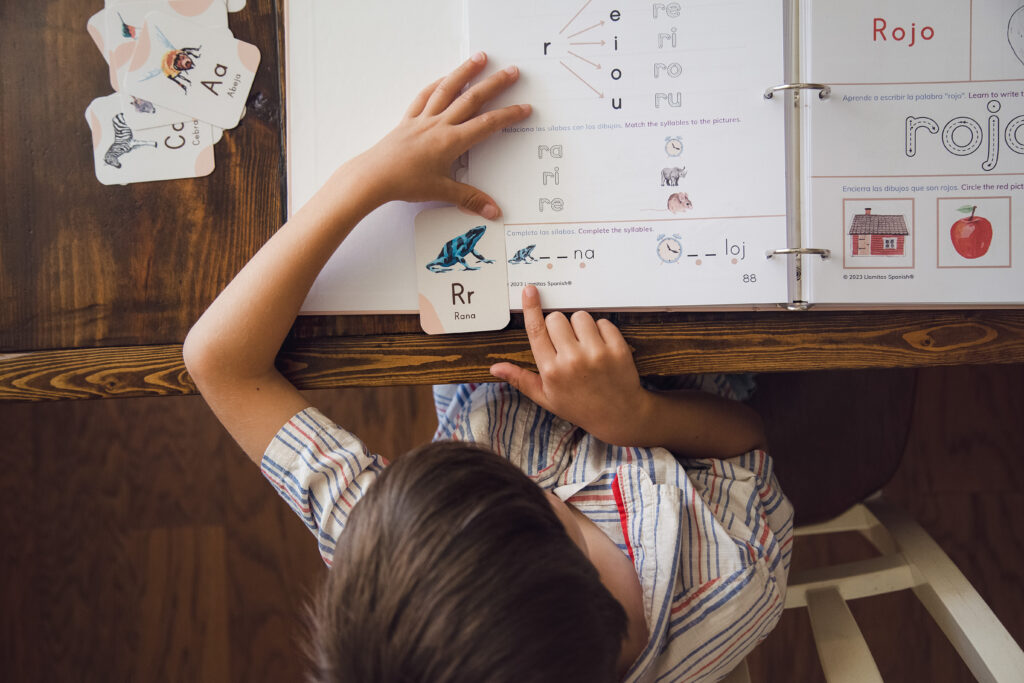
If you’re raising your preschooler bilingual, we recommend our Preschool Spanish Morning Binder. This mini course includes printables that will introduce your little one to the Spanish alphabet, and other foundational first concepts.
Should I teach reading in both languages at the same time?
Yes! It’s a myth that learning two languages at once confuses children. Supporting both languages regularly helps build balanced literacy over time.
Related post: Should my kids learn Spanish and English phonics at the same time?
When Should You Seek Help for a Struggling Reader?
If you’re wondering if your child might need intervention for their reading struggles, talking to a professional is a great first step.
For example, you can:
- Reach out to your child’s school. They can tell you if your child’s reading level is lower than expected for their grade level. Your child’s school may have a reading specialist, speech-language pathologist, or tutoring available.
- Talk to their doctor. This can rule out any physical issues that might be causing their reading difficulties, like vision or hearing problems. They may refer you to a specialist that can assess your child and determine the cause.
Both of these are great resources for getting to the root cause of your child’s reading difficulties.
Related post: How to Raise a Biliterate Child
How to Help a Bilingual Struggling Reader at Home (6 Strategies)
Whether you want to help your bilingual child learn how to read fluently in two languages or you’re addressing other reading difficulties, there are simple strategies you can use to help.
Try some of the following strategies to help your bilingual struggling reader at home:
- Read aloud for 20 minutes every day.
According to the American Academy of Pediatrics, even reading to your child in infancy can help to give their reading skills a boost.
In a bilingual household, be sure to balance exposure to both languages to promote strong reading skills in each one.
- Create a print rich environment at home.
Surround your child with books, labels, and visual words they can interact with daily. This helps normalize reading as part of everyday life.
You can use items like a forward-facing book display or alphabet posters with English and Spanish so your child can see printed letters and words easily.
- Use leveled books and readers.
Leveled books and readers are designed specifically for children who are learning how to read. Choosing books that are appropriate for your child’s reading level will help to reduce frustration.
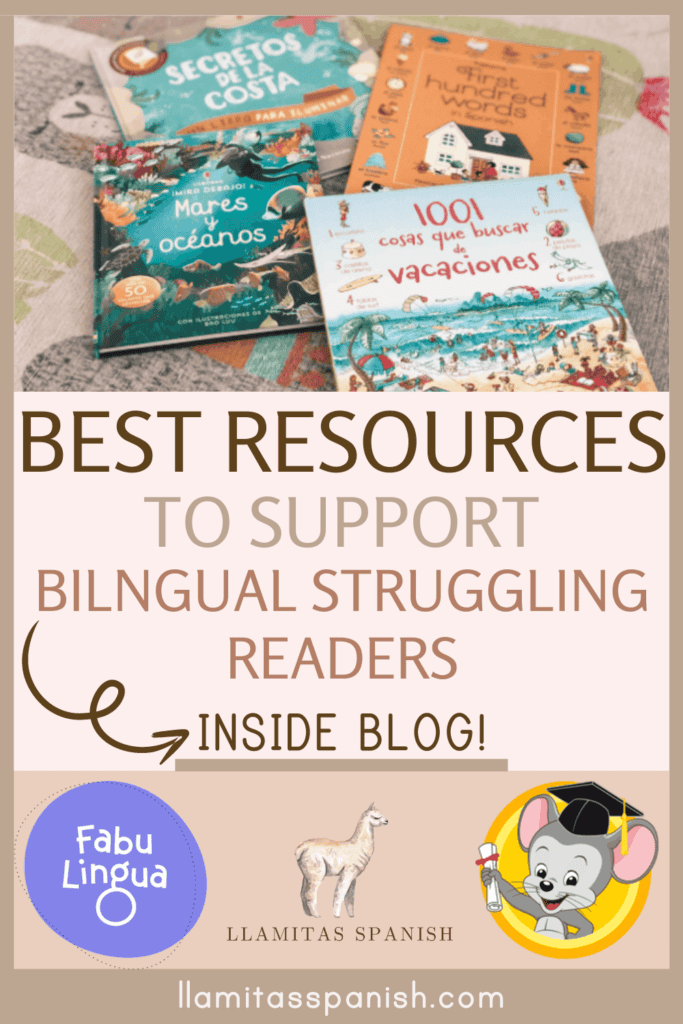
For English titles, the Step Into Reading books are an excellent choice. For your bilingual child, there are plenty of great Spanish leveled books, too!
- Tap into your child’s interests.
Interest-driven reading is especially important for reluctant readers, so let them take the lead. Kids are much more likely to engage with reading when the topic excites them.
Graphic novels, nonfiction, and themed books often work especially well for bilingual children.
Looking for engaging books? Explore our guide to Spanish chapter books for kids.
- Make reading interactive.
Research shows that interactive reading improves comprehension and keeps children engaged longer. Ask questions, use voices, and let your child predict what happens next in the story.
- Use apps for more reading practice.
Let’s face it—kids love their screen time. While we know it’s best to limit time spent on apps and electronics, why not make the most of that time with apps that promote literacy?
Here are two great educational apps for kids that can help give your child the extra reading practice they need:
- ABC Mouse is an award-winning app that comes highly recommended by parents and teachers. It has play-based, interactive games and activities that support literacy skills, from letter recognition and sounds to reading full stories.
- FabuLingua is the best app out there for learning how to read in Spanish. It teaches children how to read in Spanish through interactive stories and games, and will also give them some practice reading aloud.
Related post: FabuLingua Spanish Kids App Review
Support Your Bilingual Reader with Confidence
Helping a bilingual struggling reader doesn’t have to feel overwhelming—you just need the right tools and a game plan.
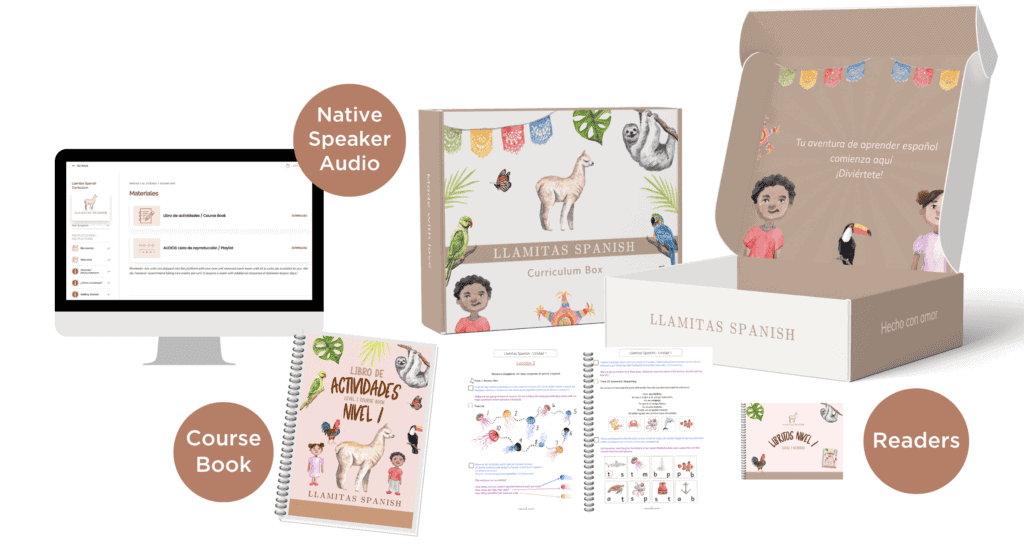
Our Llamitas Spanish Curriculum levels are designed specifically for bilingual families. With open-and-go lessons, your child will develop phonics, vocabulary, and reading fluency step by step.
When it comes to your child’s biliteracy, small but consistent effort can lead to big progress.
You can start building reading skills with simple steps:
- 20 minutes of daily read-aloud time
- Leveled readers in both languages
- A mix of fun, interactive reading activities
Explore our Spanish curriculum to find the right fit for your child and start building confident, bilingual readers today!

Lydia is a freelance parenting and education writer. She previously taught English as a second language and enjoys sharing her love of language learning with her children.