

In this post: We cover what you need to add a foreign language to your homeschool—plus tips for getting started.
If you’re thinking of adding a foreign language to your homeschool, there has never been a better time to do so.
With so many language learning resources available, you can successfully teach your child a second language—even if you don’t speak it yourself.
In this guide, you’ll learn how to get started teaching a foreign language in your homeschool step-by-step.
Table of Contents
How to Start Teaching a Foreign Language in Your Homeschool (Step-by-Step)
Adding a foreign language to your homeschool doesn’t have to be overwhelming. With a few simple steps, you can confidently start teaching a foreign language at home—no prior experience needed!
We’ll dive into the details later, but here’s a quick overview of what you’ll need to do to get started
- Choose the language.
If you’re teaching more than one child, you’ll want to choose a language that makes the most sense for your family. Spanish is a popular choice in the US, but the best option is the one your child will be excited to learn and hears most for context.
2. Set realistic goals.
Are you aiming for fluency, learning the basics, or an academic advantage? Having a clear goal will help you choose the right curriculum and set a manageable pace.
3. Pick a homeschool-friendly curriculum.
A structured, open-and-go curriculum can make all the difference—especially if you don’t speak the language yourself.
4. Keep it interactive and fun.
Language learning should feel engaging, not overwhelming. Use games, songs, and hands-on activities whenever possible.
5. Stay consistent and adjust as needed.
Progress in language learning takes time, so focus on consistency over perfection. Pay attention to what’s working (and what’s not), and don’t be afraid to adjust your approach as your child grows.
Benefits of Teaching a Foreign Language in Your Homeschool
Adding a foreign language to your homeschool has many advantages for your child.
Starting at a young age is ideal for learning a second language, but you can get started anytime!
Here are just a few reasons to add a foreign language to your homeschool:
- Improved memory, cognitive flexibility, and problem-solving skills. These skills will help your child academically and set them up for future success.
- Social awareness and empathy. When we learn a second language, we’re also learning a new culture.
- Competitive advantage. Bilingualism is becoming an increasingly desired skill in the workforce as our world becomes more globally connected. By homeschooling a foreign language, you can set your child up for future success.
- Communication. Of course, learning a second language allows your child to communicate with more people in your community and around the world.
Related post: Bilingual Homeschooling Moms
How to Choose the Best Foreign Language for Your Homeschool
Once you’ve decided to teach your child a second language, you’ll have to decide which language to teach. There isn’t a one-size-fits-all option, so you’ll have to consider what’s right for your child and your family.
When choosing a foreign language to homeschool, you can start with your child’s interests, but also consider some of the following factors:
- Your family’s heritage
- Your community
- Travel destinations
- Long-term goals
- Difficulty
Here’s a quick comparison of some of the most popular foreign language homeschooling choices for English speakers:
| Language | Best for | Difficulty | Why Choose It |
| Spanish | US-based families | Easy–Moderate | Widely spoken, lots of resources |
| French | Cultural studies | Moderate | Common in schools, global use |
| Mandarin | Long-term academic goals | Challenging | High demand globally |
| Heritage language | Family connection | Varies | Meaningful, personal |
The best language for your homeschool ultimately depends on your goals, your child’s interests, and how you plan to use the language.
How to Choose a Homeschool Foreign Language Curriculum
Choosing the right foreign language homeschool curriculum for your child will play a huge part in their success.
To ensure that your child has fun and gains language skills at a rate that you’re happy with, you’ll need to consider:
- Instructional methods
- Level & ages
- Learning style
Instructional Methods
Even among foreign language homeschool programs, you’ll find a variety of instructional methods used, like Charlotte Mason or thematic studies.
You’ll need to decide what types of materials or courses you want to use, such as:
- Textbooks
- Online courses
- Live classes
- A personal tutor
- Games and apps
- Authentic materials (like books and movies)
You can also use a combination of more than one of these approaches. For example, while authentic materials and games can be great in addition to a formal curriculum, they aren’t as effective on their own.
Levels & Ages
Your child’s level and age is important for choosing a homeschool language curriculum.
For younger kids, look for a program that:
- Is interactive and fun
- Teaches phonics
- Includes speaking and listening
For older children:
- Dives deeper into reading, writing, and grammar
- Explores interesting topics
- Is academically rigorous
Finally, foreign language homeschool programs can be designed for non-native speakers, native and heritage speakers, or both.
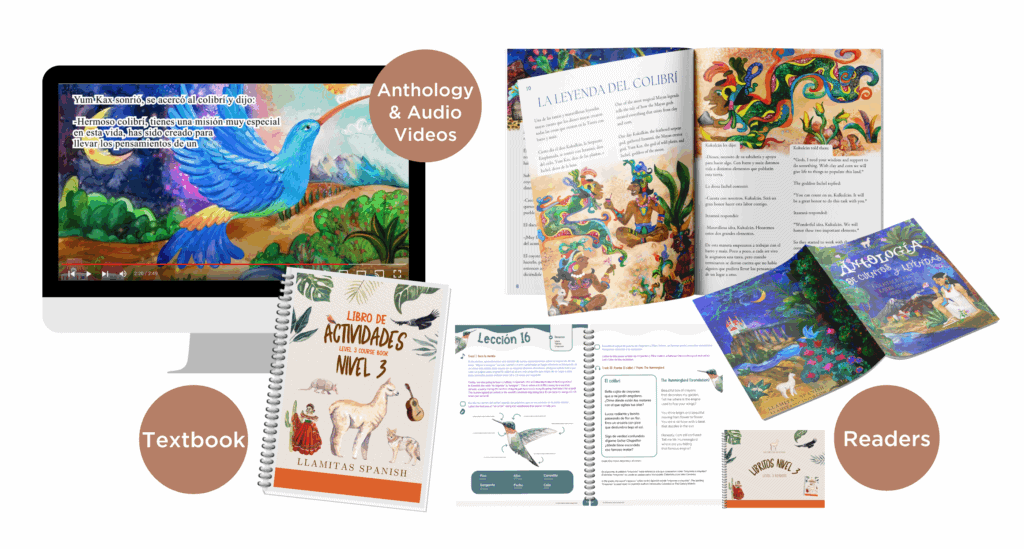
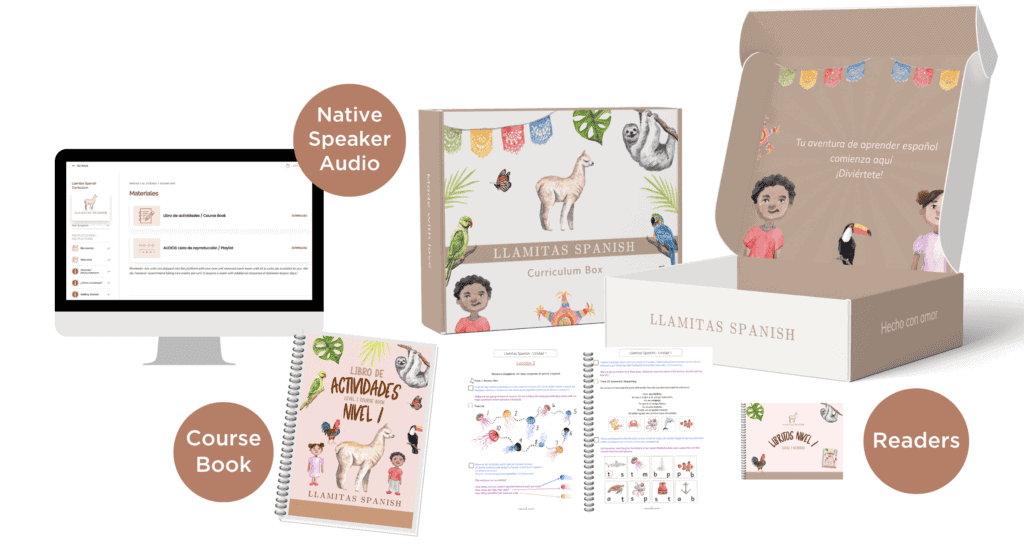
A program like Llamitas Spanish can benefit native and non-native speakers alike since it includes bilingual, open and go, scripted lessons. Take our placement quiz here to find the best level for your child!
Learning style
Don’t forget to keep your child’s learning style in mind when choosing a foreign language curriculum.
The main types of learning styles are:
- Visual
- Auditory
- Kinesthetic
- Reading/writing
Some children may do better with a more academic approach, or prefer online courses over textbooks (or vice versa). Likewise, some children (particularly young children) learn better with more hands-on or play-based activities.
Do I need to know the language to teach it?
No! You can find homeschool foreign language programs designed for parents with no prior experience that include scripted lessons and audio support.
Related post: Here’s Why Thematic Spanish Lessons for Kids Actually Work
Best Ways to Teach a Foreign Language in Your Homeschool
Live classes, textbooks, or apps—how should you actually teach and reinforce the language in your homeschool? Let’s take a look at your options.
Using a Curriculum
If you want a simple, open-and-go solution with minimal prep, a complete curriculum is usually the best place to start—especially for beginners.
The best homeschool Spanish curriculums will have everything you need, from course books to additional activities and study materials.
Many of these courses make it easy for you to learn alongside your child, too!
Live Classes
Live classes are a great option if you are looking for something with little parent involvement, especially if you aren’t confident in your skills in the language or want your child to work with a fluent speaker.
TruFluency Kids is our personal recommendation for ages 4 to 17, and offers immersive, interactive online classes for all levels. These are live thematic classes offered by native speakers.
Language Learning Apps
Apps can’t replace a full curriculum. But they can be a great way to give your child extra practice and exposure to their target language while having fun!
If you’re looking for some ways to gamify the learning process and even leverage your child’s screen time, there are some awesome Spanish apps for kids to check out.
Duolingo vs. Llamitas Spanish: Choosing a Spanish Curriculum for Kids
Free Resources
Just like when you use apps alongside a more formal homeschool foreign language curriculum, pulling from free sources can give an extra boost to language learning. There are loads of free resources online, and chances are there are some available at your local library as well.
Learning Spanish? Our Freebie Library is a completely free resource library with Spanish printables, games, and more!
How often should kids practice a foreign language?
Consistency matters more than length—daily exposure, even for just 10–15 minutes, is more effective than longer, infrequent sessions.
Ready to Start Teaching Spanish in Your Homeschool?
If you’re looking for an open-and-go Spanish curriculum that works for all levels, check out our Llamitas Spanish curriculum for kids.
Homeschooling in a foreign language is so easy with these lessons, designed with homeschool families in mind. Here’s why:
- No prior Spanish required
- Scripted, easy-to-follow lessons
- Engaging, thematic units kids love
- Rooted in the Hispanic culture
Take the placement quiz to find the perfect level for your child!

Lydia is a freelance parenting and education writer. She previously taught English as a second language and enjoys sharing her love of language learning with her children.