

In this post: Plan your bilingual homeschool year with this guide. Plus tips for balancing English and Spanish instruction.
It might be hard to believe, but the next school year is just around the corner. That means it’s already time for homeschooling parents to get to work on planning the academic year ahead!
Bilingual homeschooling is becoming an increasingly popular path in the U.S.
Some parents want to preserve a heritage language. Others want their children to become fluent early or have an academic dual-language education. Whatever your reason, getting started can feel overwhelming.
For parents that want Spanish to be more than an elective, Llamitas Spanish is here to guide you!
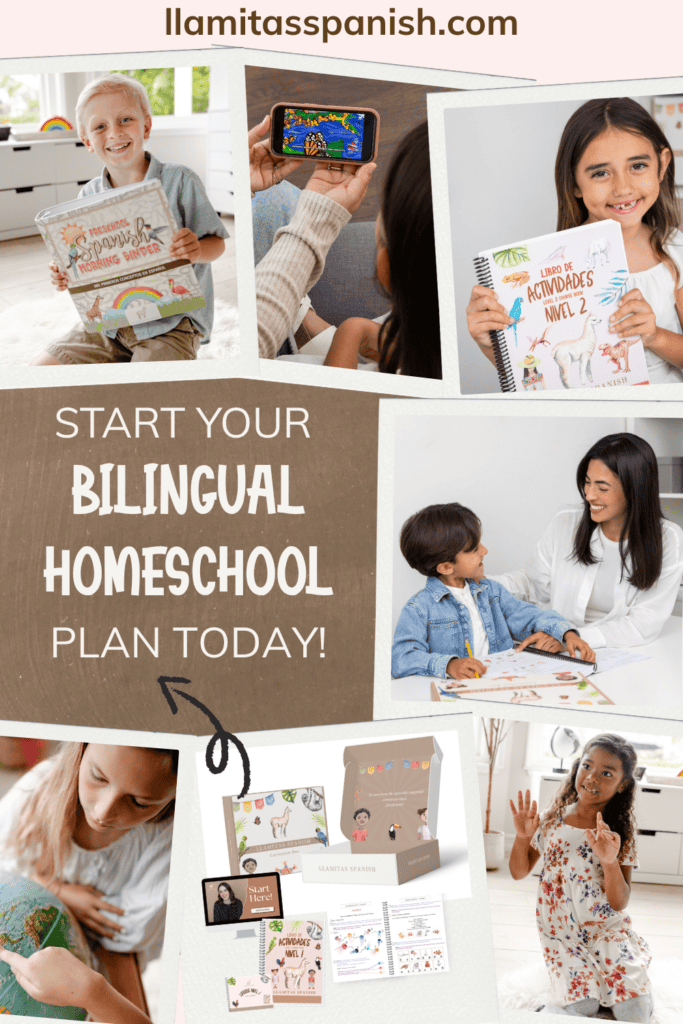
Questions about legality, curriculum choices, and balancing English and Spanish are common. The good news is bilingual homeschooling does not need to be complicated. With a clear plan and the right resources, you can build a program that works for your family.
This guide covers common questions about homeschooling in Spanish, practical planning tips, and ways to pair strong Spanish learning with English academics so you can move into the school year with confidence.
Related post: Dual Language Homeschool Education
Table of Contents
Is it Legal to Homeschool in Spanish?
Homeschooling is legal in all 50 states, but each state sets its own rules.
In many U.S. states, families can homeschool in Spanish or another language as part of instruction. However, homeschool laws vary by state, so it is important to verify current requirements where you live.
Many states do not specifically prohibit bilingual instruction, which means families often teach in two languages (for example, English + Spanish) or teach some subjects in one language and others in another.
Other states may require certain records, testing, or evidence of progress in English. California, for example, has historically required instruction in English in some homeschool pathways, which can affect how families structure bilingual learning.
Some states may require:
- Certain records in English
- Standardized testing in English
- Evidence that core subjects are being taught
- English instruction under some homeschool pathways or private school statutes
Because regulations can change, check your state homeschool laws directly before planning your program. Organizations such as the Home School Legal Defense Association (HSLDA) can be a starting point for general guidance, but official state sources should be your primary reference.
So the key legal question is usually not “Can I teach bilingually?” but rather “Can I still meet my state’s homeschool requirements while teaching bilingually?
Key takeaway
Homeschooling in Spanish is often possible, but your structure should align with your state’s current legal requirements.
Related post: Spanish-First Homeschooling
How to Balance Spanish and English in a Homeschool Day
One of the most common questions we get from parents is how to balance instruction when homeschooling in Spanish and English.
This can take a bit of trial and error for some families, as there isn’t exactly a one-size-fits-all approach. It can be overwhelming to try and teach every subject in two languages, so experiment to see what works for you.
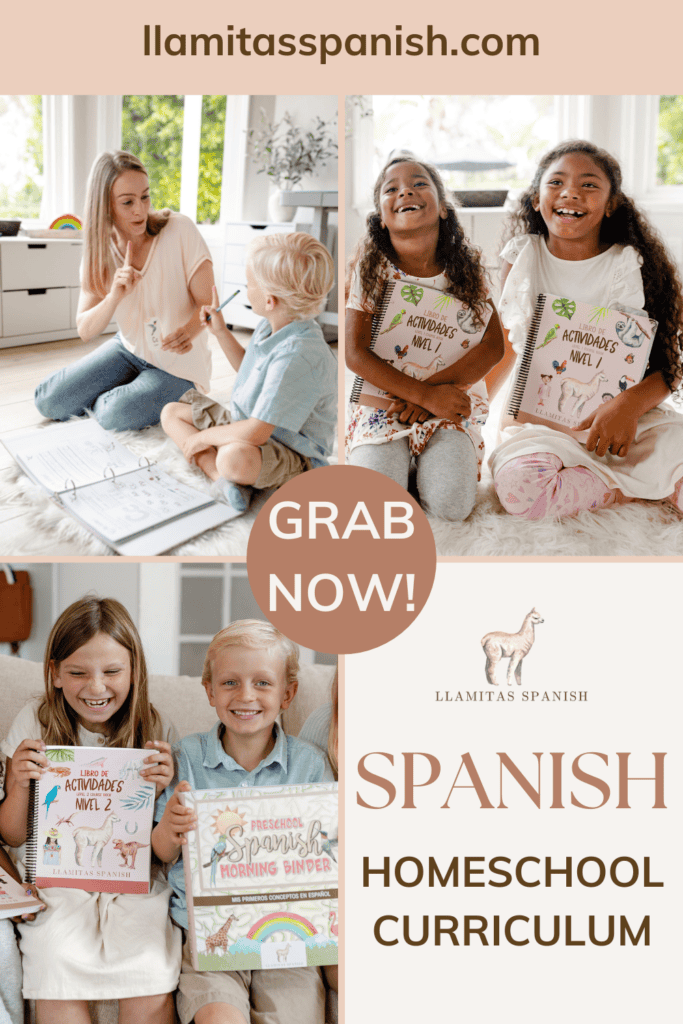
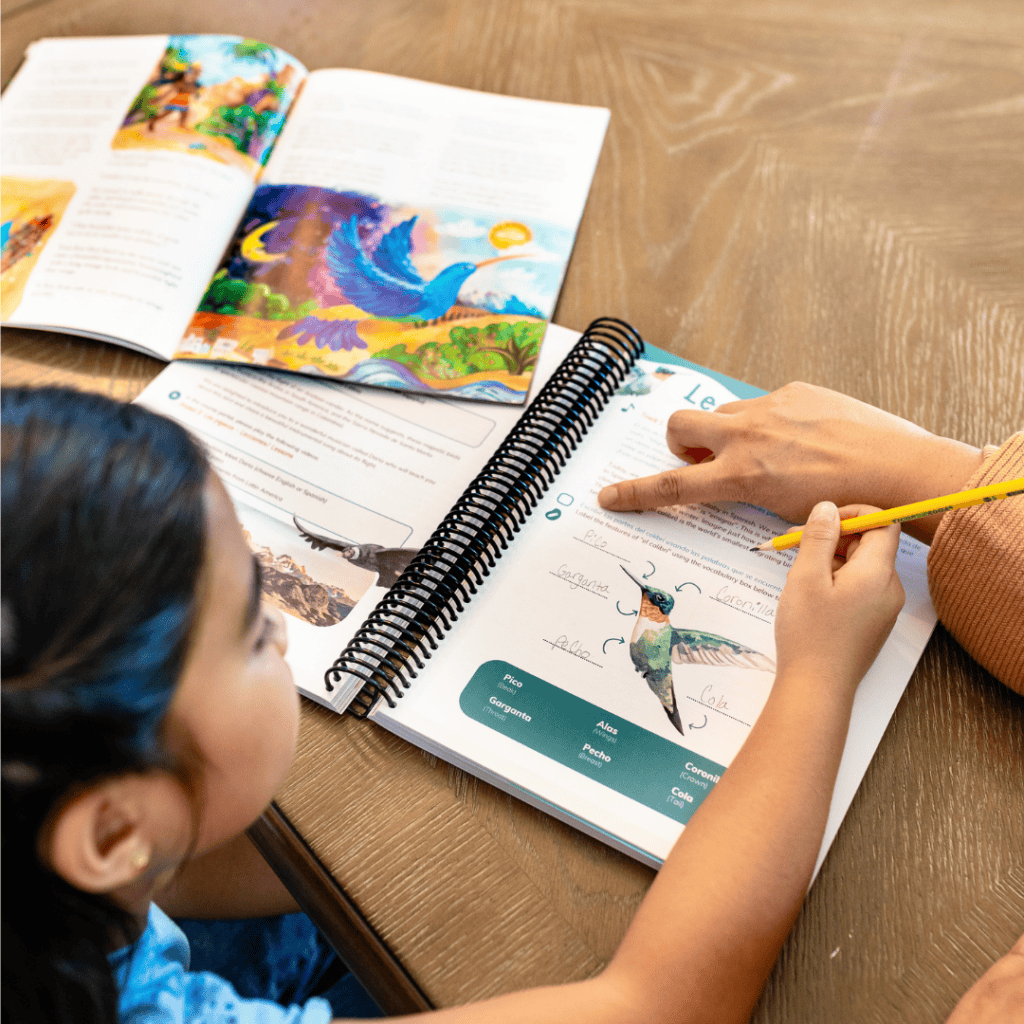
At Llamitas Spanish, our curriculum levels use a thematic approach to teach the core subjects—math, science, social studies, and Spanish language arts—completely in Spanish.
Don’t worry if you don’t find a rhythm immediately. Bilingual education is a journey that can take some time, and there isn’t only one “right” way to do it. Be flexible and find what works for your family!
One of the biggest concerns families have is how to divide time between two languages. There is no single correct model. What works best depends on your child’s age, language level, and academic needs.
Many families use one of these approaches:
Subject Split
Teach some subjects in Spanish and others in English.
Example:
- Science and social studies in Spanish
- English language arts in English
- Spanish language arts in Spanish
- Math in English or both languages
Time Block Model
Assign part of the day to each language.
Example:
- Morning: Spanish instruction
- Afternoon: English reading and math
Gradual Immersion
Use more Spanish in the early years, then add more English academic instruction as students get older.
This is how a dual language program operates, typially with TK-2 experiencing between 80-90% of daily instruction in Spanish for all subjects except English Language Arts. By 3rd grade it splits evenly to 50/50 and by 3rd grade math instruction is exclusively in English.
Related post: How to Add a Foreign Language to Your Homeschooling
Should You Teach English Language Arts Too?
Yes. If you live in the United States, most families benefit from intentionally teaching English reading and writing alongside Spanish learning.
Even if your child is becoming fluent in Spanish, they may still need structured support in:
- English phonics
- Reading comprehension
- Grammar
- Writing skills
- Academic vocabulary
This becomes especially important if your child may take standardized tests, transition into traditional school later, or attend college in English.
Some homeschool ELA programs that work well alongside our Llamitas Spanish curriculum include:
- The Good and the Beautiful: This faith-based curriculum has a similar open-and-go feel to our curricula, with the option to choose just the language arts course sets if that’s all you need.
- The Story Weavers: If you’re looking for secular English language arts for homeschoolers, the Story Weavers emphasizes communication and literature through an open-and-go curriculum.
- Harbor and Sprout: Immersive, themed unit studies make this beautiful secular curriculum a great choice to pair with our cross-curricular Spanish lessons.
- All About Reading: Another secular program, this literature-based homeschool curriculum helps build the foundations in English phonics.
We think all of these are excellent options to include in your bilingual homeschooling plan. Still, take some time to consider your preferred structure, personal beliefs, and your child’s learning style when choosing an English homeschool ELA program to pair with Llamitas Spanish.
What About Math?
Our homeschool Spanish curriculum covers basic math concepts in Spanish, such as:
- Counting
- Telling the time
- Measurements
- Addition and Subtraction
- Shapes
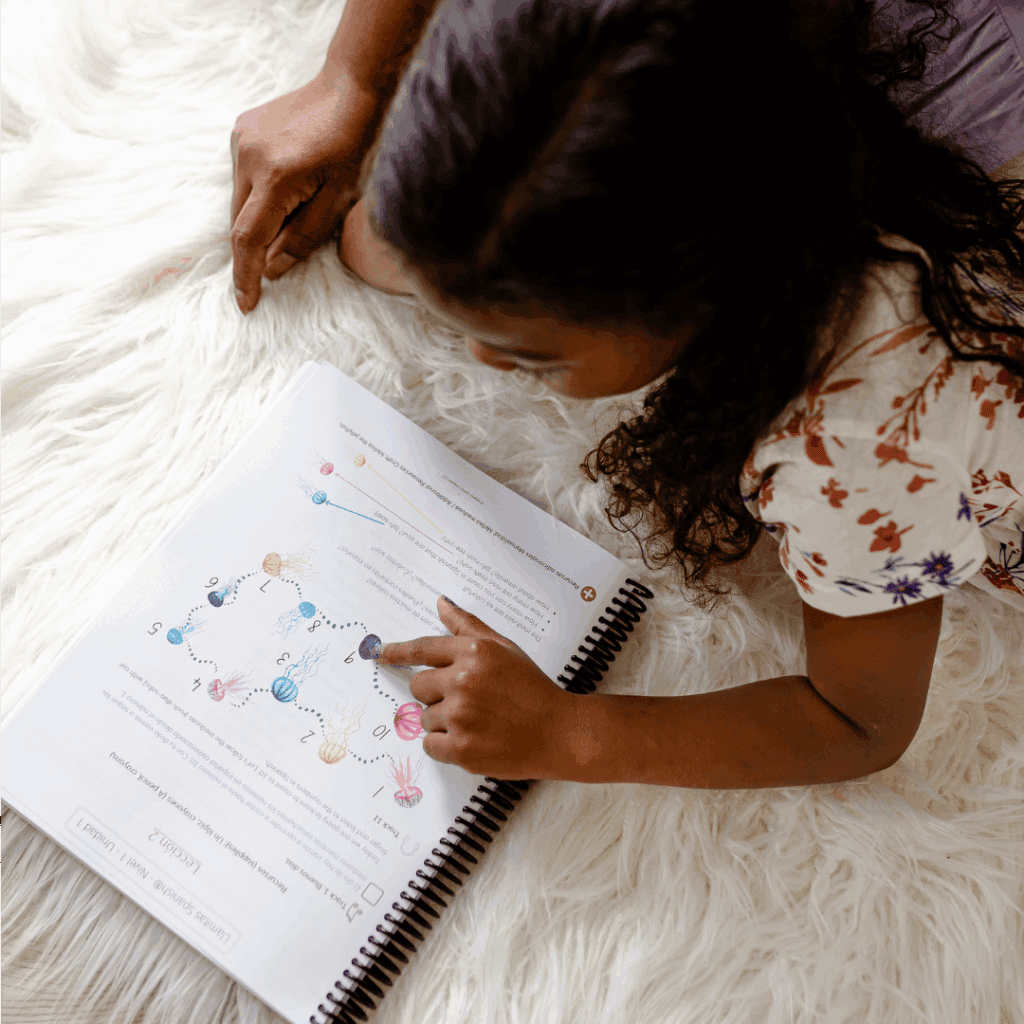
We do recommend completing a full math program in English beginning in first grade at a minimum. This will allow them to dive deeper into math concepts and learn necessary vocabulary for math fluency in English.
Parents often ask us about math for bilingual homeschool, and we highly recommend Math with Confidence by Kate Snow. We feel this program has the best structure and alignment for pairing with Llamitas Spanish math.
For some families, math is easiest to teach primarily in English while reinforcing terms in Spanish informally.
How to Plan Your Bilingual Homeschool Year
A strong plan reduces stress and helps you stay consistent.
1. Set Clear Goals
Start by identifying what success looks like this year.
Ask:
- Do you want conversational fluency or literacy in Spanish?
- Which subjects will be taught in each language?
- Are there state testing requirements?
- What academic skills need the most support?
If you have multiple children, goals may differ by child.

2. Choose a Flexible Homeschool Style
There are a lot of choices when it comes to homeschool philosophy, but the good news is you don’t have to pick just one! Many bilingual homeschooling families blend different homeschooling methods to find what works for them. Flexibility is key!
Popular options include:
- Charlotte Mason
- Montessori
- Unit studies
- Classical education
- Eclectic homeschooling
Bilingual families often do best when they stay flexible and adapt based on progress. Llamitas Spanish incorporates elements from many of these with a focus on unit studies.
3. Build a Weekly Rhythm
Structure is so important when homeschooling, which is why creating a daily or weekly schedule is essential. Kids thrive on routine, and knowing what to expect can reduce stress for everyone in the house.
Example weekly structure:
- Monday–Thursday: Core academics
- Friday: Projects, field trips, nature study, cultural learning
Example daily structure:
- Morning: Spanish subjects
- Midday: Reading aloud
- Afternoon: English language arts and math
4. Use Themes Across Subjects
Themes can make bilingual learning more natural and memorable. It allows students to apply what they’ve learned across subjects for a deeper understanding and engagement with the material.
Examples:
- Birds
- Space
- Transportation
- Seasons
- Community helpers
A theme can connect vocabulary, reading, science, art, and writing in both languages.
Related post: Here’s Why Thematic Spanish Learning Works
5. Track Progress Simply
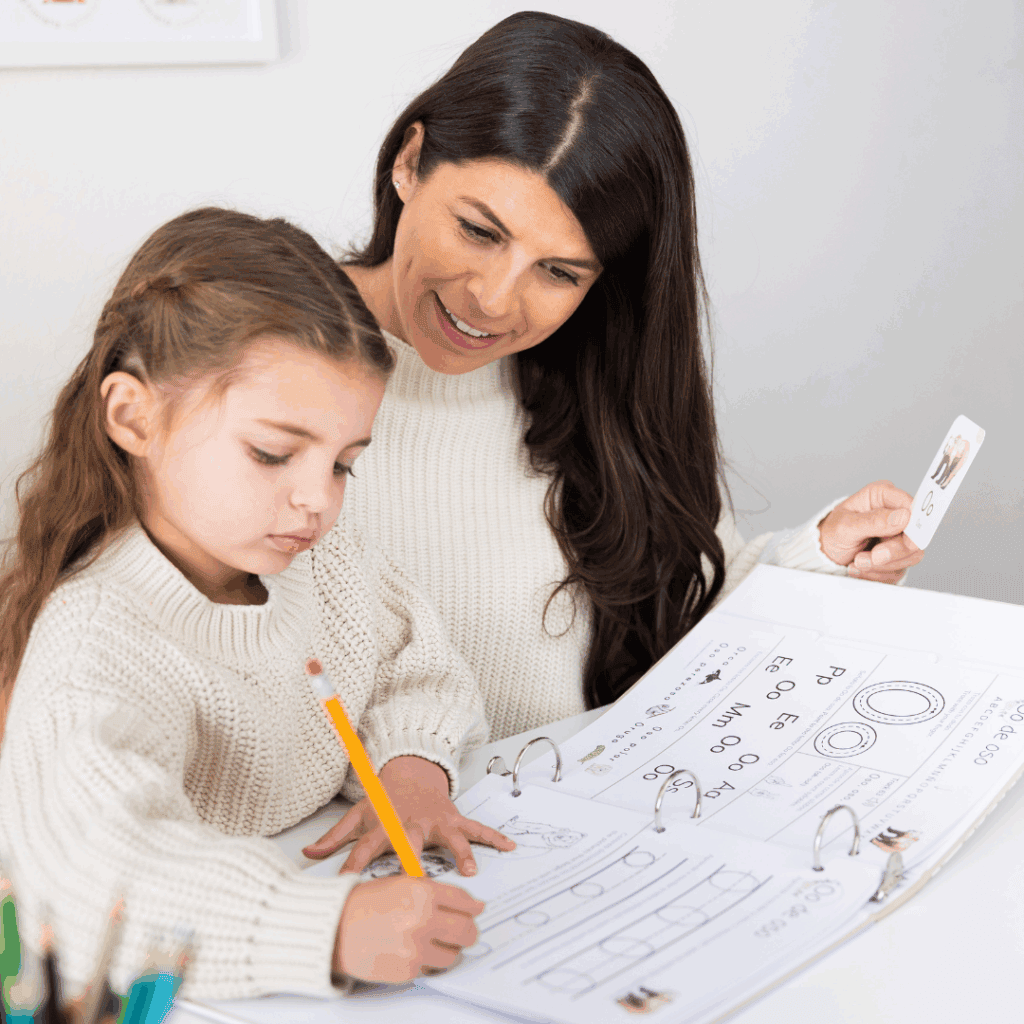
You do not need a complicated planner. A notebook, spreadsheet, or simple homeschool planner can help you track:
- Books completed
- Skills mastered
- Spanish exposure hours
- Goals for next month
Don’t forget to plan for breaks during the school year too! When using a homeschool planner, it’s important to remain flexible—if your children need more time on a topic, it’s OK to slow down.
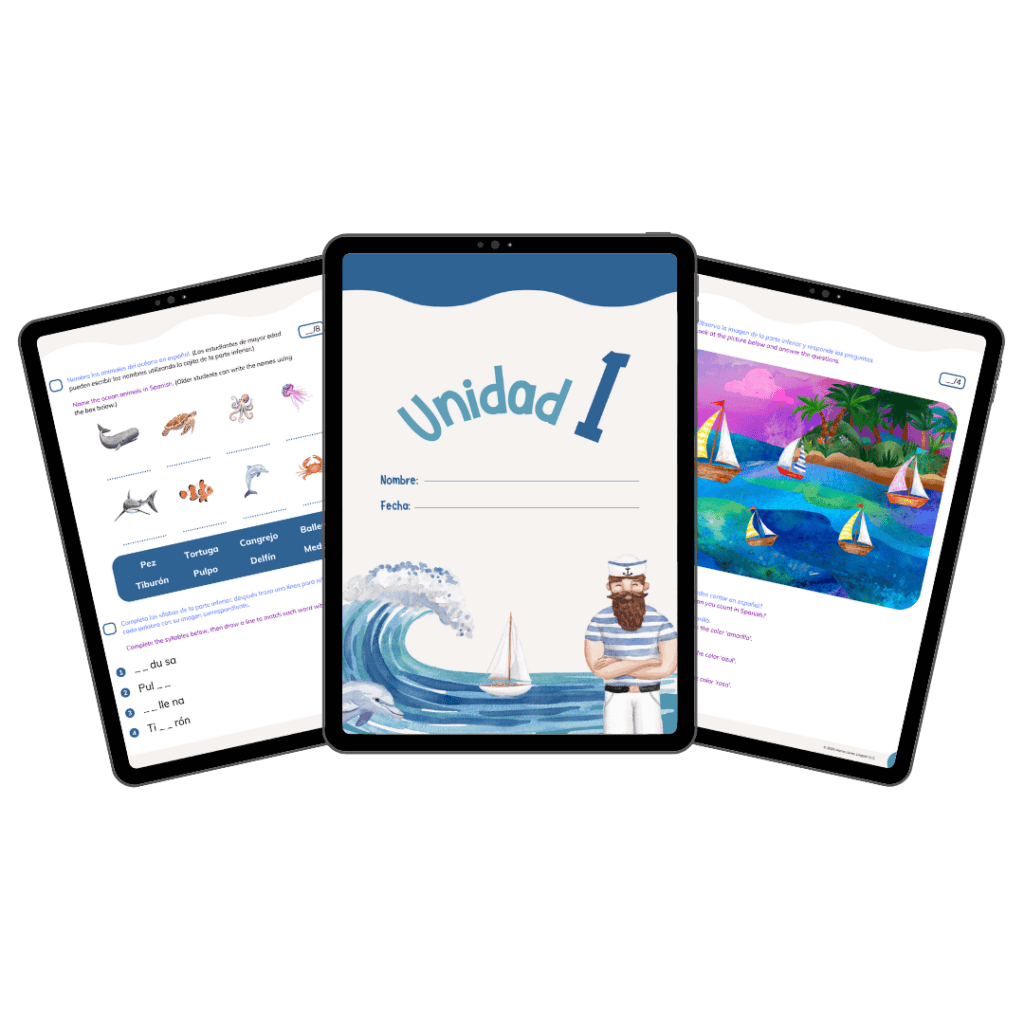
At Llamitas Spanish, we provide end of unit quizzes to show progress over time. In addition, each curriculum level includes an index and full scope and sequence.
Common Bilingual Homeschooling Mistakes to Avoid
Trying to Do Everything in Two Languages Immediately
Start smaller than you think you need to.
Switching Systems Too Often
Give routines time to work before replacing them.
Comparing Your Family to Others
Every bilingual household has different strengths, schedules, and language backgrounds.
Ignoring English Literacy Needs
Spanish fluency and English academic readiness can grow together.
Llamitas Spanish All-in-One Curriculum
Homeschooling in Spanish can be one of the most rewarding ways to raise bilingual children. It offers daily language exposure, deeper cultural connection, and the flexibility to tailor learning to your child.
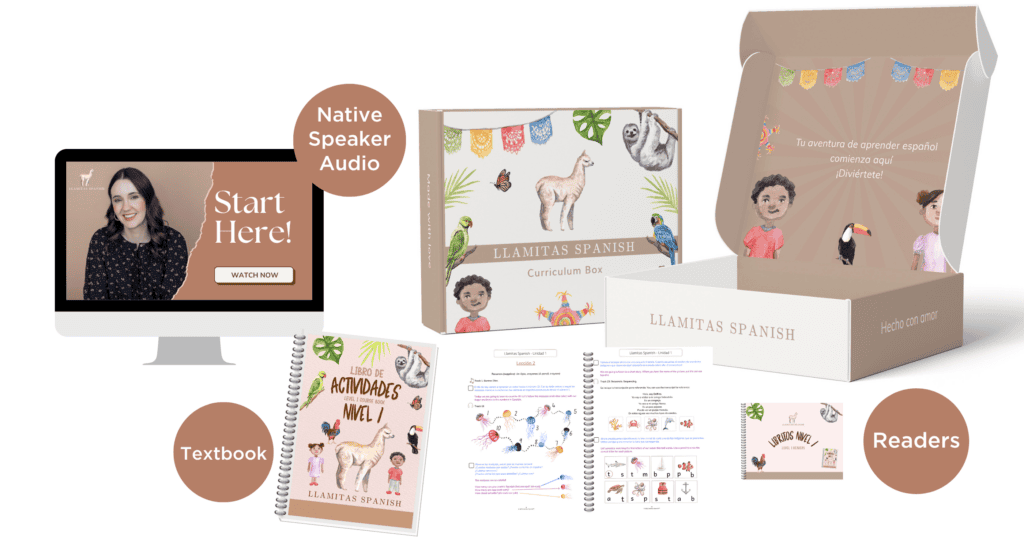
Llamitas Spanish is an authentic and wholesome curriculum that covers CORE subjects in Spanish. With bilingual scripts, Llamitas supports both beginners and native speaking families.
With beautiful unit studies, our lessons cover Spanish Language Arts, basic math, sciences, social studies, geography, civics, and more!
Take the placement quiz on our website to get started today!

Lydia is a freelance parenting and education writer. She previously taught English as a second language and enjoys sharing her love of language learning with her children.