

In this post: Discover the top 5 reasons your child is likely resisting their Spanish lessons. Plus helpful tips to reengage them so they are begging you to do one more Spanish lesson!
Is your child suddenly resisting their Spanish lessons? Are you asking yourself “Why is this turning into a battle?” “Is it the curriculum?” “Am I doing it wrong?”
This can be so disheartening, especially when you love the curriculum you picked for them!
But here’s the truth: Kids rarely refuse to do their Spanish curriculum “just because”. There’s almost always an underlying reason. If you notice this pattern of resistance, it’s important to not push harder.
Instead, I urge you to get curious about what’s behind it because small shifts can turn things around in a big way.
Let’s walk through what might be going on and how to gently re-engage your child.
Table of Contents
The Level Isn’t the Right Fit
This is one of the biggest (and most overlooked) reasons kids resist their Spanish curriculum.
If the material is too difficult, kids can feel overwhelmed or discouraged. If it’s too easy, they get bored and disengage. Either way, resistance shows up quickly.
do this instead:
- Are they hesitating a lot or shutting down? → Try revisiting an earlier lesson to boost their confidence. Our curriculum is intentionally sequenced, so it’s okay to slow down or repeat lessons. Mastery builds confidence.
- Are they rushing through or feeling bored? → They might be ready to move on for a bit more challenge.
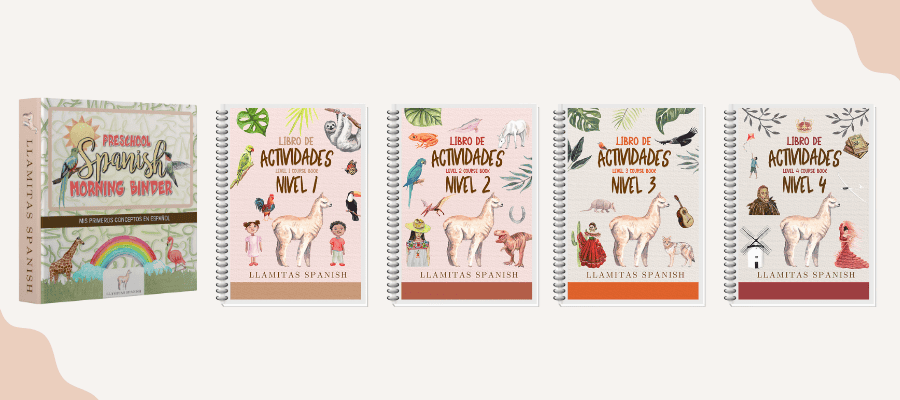
At Llamitas Spanish we have several resources to help you choose the best fit level for your child including:
- A placement quiz
- Explainer videos
- A complete Scope and Sequence with sample lessons in the Freebie Library
Speaking is Forced Too Soon
This second common reason why kids resist their Spanish curriculum may surprise you. After all, aren’t languages meant to be spoken?
It’s easy to fall into the trap of wanting visible progress through speaking but language learning doesn’t always look linear. In fact, research shows that we need to actively protect the ‘silent period’ in second language learning.
The “silent period” is a natural early stage of language learning where children absorb large amounts of language through listening and understanding but don’t yet speak it, and this is not a problem. It’s actually essential.
During this phase, the brain is building the foundation for language through comprehensible input while avoiding stress (or a high “affective filter”), and forcing kids to speak too soon can actually hinder progress and create anxiety.
I always love to give this analogy:
Language development in the early years is like a plant: the most important growth happens beneath the surface, often unseen but mighty, quietly building a strong foundation so it can eventually blossom.
Even if your child isn’t speaking yet, they are building fluency by absorbing sounds and patterns, developing comprehension, and laying the groundwork for future language use.
do this instead:
Learners should be given rich input, trusting that speech will emerge naturally once they are ready (often suddenly and with surprising fluency!)
- Pause formal instruction from the textbook for a few days
- Avoid forcing participation or “correct” answers
- Focus instead on exposure and enjoyment through fun activities like games, songs, and stories.
Sometimes, the most powerful thing you can do is stop forcing speaking while still maintaining regular low pressure input. Which leads me to the next point:
Pressure is Too High
One of the biggest mistakes parents make with Spanish lessons is unintentionally turning them into something that feels like a test.
When children feel pressure to perform, get the “right” answer, or keep up, learning can quickly become stressful instead of enjoyable.
do this instead:
Language is a beautiful but imperfect thing. Reduce the pressure and normalize mistakes so they are not afraid to make them.
You can still reinforce learning by using:
- Songs and audio playlists – play them in the car, during playtime, on a Yoto card, or during screen time with our Canciones ilustradas
- Flashcards – turn them into simple games like memory, scavenger hunts, or matching. Here’s a great post with ideas on using flashcards.
- Movement-based activities – act out words, dance to songs, or incorporate gestures.
These tools help reinforce vocabulary and comprehension in a way that feels natural, not forced.
Children acquire language best when they feel relaxed and safe. When the pressure goes down, curiosity often comes back up.

Overcorrecting Their Spanish
As the lead teacher for your child, chances are you’re tempted to correct every mistake they make. Isn’t that our job after all: To teach them correct grammar and pronunciation?
There’s a lot of controversy and debate about whether, and how much, you should correct your child’s Spanish.
Our goal is not only to raise bilingual children, but to nurture a genuine love for the Spanish language and Hispanic culture. That kind of connection can only flourish when a child feels confident, capable, and emotionally safe in the language.
For this reason, I avoid correcting in a way that highlights mistakes.
Do This Instead:
- Model the correct language naturally in your response (e.g., repeat their sentence back correctly in conversation).
Example 1: Mixing the language
Child: Yo no want leche
Parent (modeling, not correcting): Ah, ¿no quieres leche? Está bien. ¿Quieres agua?
Example 2: Incorrect grammar use
Child (pointing at the picture): Veo un gallina.
Parent (modeling, not correcting): ¿Ves una gallina? Genial.
- Prioritize communication over perfection, celebrating their effort to express ideas rather than focusing on grammar or pronunciation accuracy.
- Keep feedback light and selective, gently correcting only a few key patterns at a time so your child stays confident and engaged.

Lack of Autonomy or Control
When Spanish lessons are too rigid for your child, resistance can develop. Some children may not like being told exactly what to do and when to do it, without a say in the process.
Our Llamitas Spanish curriculum is completely open-and-go, meaning it’s fully designed and sequenced so there is little to no prep work for you as the teacher. We even tell you what to say with the scripts!
This is often praised as a highlight of the program for parents, but you should still build in giving small choices and ‘a voice’ to your child: allowing them to have a say in what activity comes first can reduce pushback.
If the lesson starts with the welcome song followed by vocabulary, but your child wants to begin with the song they practiced in the last lesson, let them!
Yes, progress is important, but their enthusiasm is key!
Lesson cadence
I also want to note here that it’s easy to fall into a cycle of pushing to finish the lesson so you can mentally check that box, but this often leads to rushing, and poor quality input.
At Llamitas Spanish, our lessons are short and sweet in the early levels (15 to 20 minutes) and gradually increase in the upper levels (25-30 minutes). That said, you know your child and their tolerance best.
Do this instead:
- Pause lessons whenever your child needs a break. Pick it up again later in the day, or the next day
- Revisit lessons for repetition and practice
- Let them! If your child wants to go ‘off script’ and revisit songs, stories, or games- follow their lead.
Final Encouragement
If your child is resisting, it doesn’t mean the curriculum isn’t working, or that you’ve done anything wrong. More often, it simply means something needs a small adjustment.
Stay flexible. Keep things light. And remember: your goal isn’t perfection. It’s building a positive relationship with the language.
Remember: progress in language learning is often subtle before it becomes obvious. Even if your child isn’t speaking yet (which is normal in the early stages), celebrate their small wins, and trust the process. Consistent input really does work.
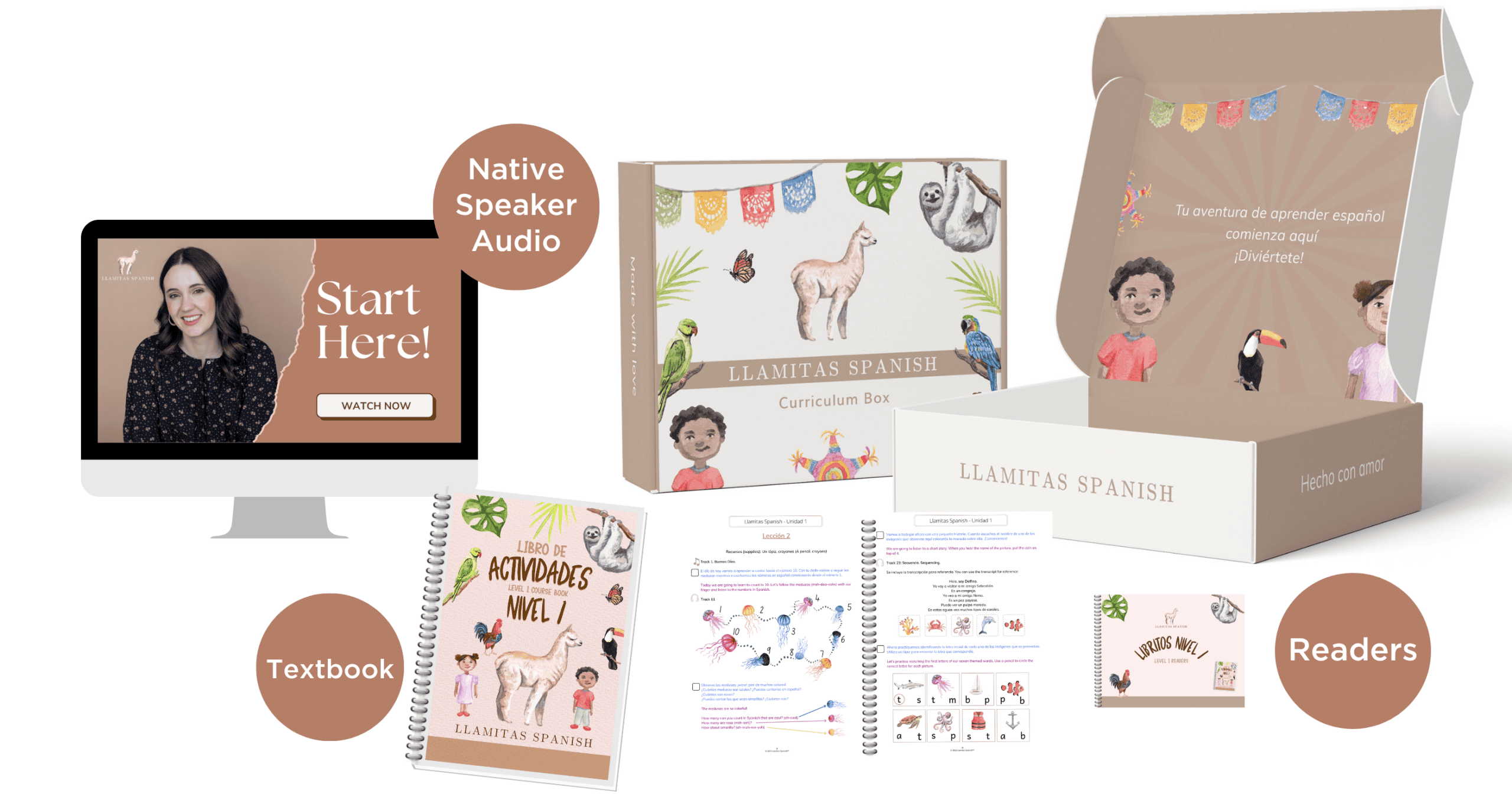
Llamitas Spanish is here to guide you every step of the way with award-winning open-and-go, sequential curricula that makes teaching Spanish easy and joyful.

Founder of the Llamitas Spanish® Curriculum and former Spanish teacher. Corrie holds two Master Degrees in Spanish and Education. She lives in San Diego, California with her husband and two bilingual children.