
In this post: Learn how you can teach your child Spanish at home with the Charlotte Mason method for language learning.
You may have heard of the Charlotte Mason method for homeschooling, but did you know it can be applied to language learning too? In this approach, children learn language naturally through conversation, stories, songs, and cultural exposure rather than grammar drills.
Find out how you can teach your kids Spanish with the Charlotte Mason method!
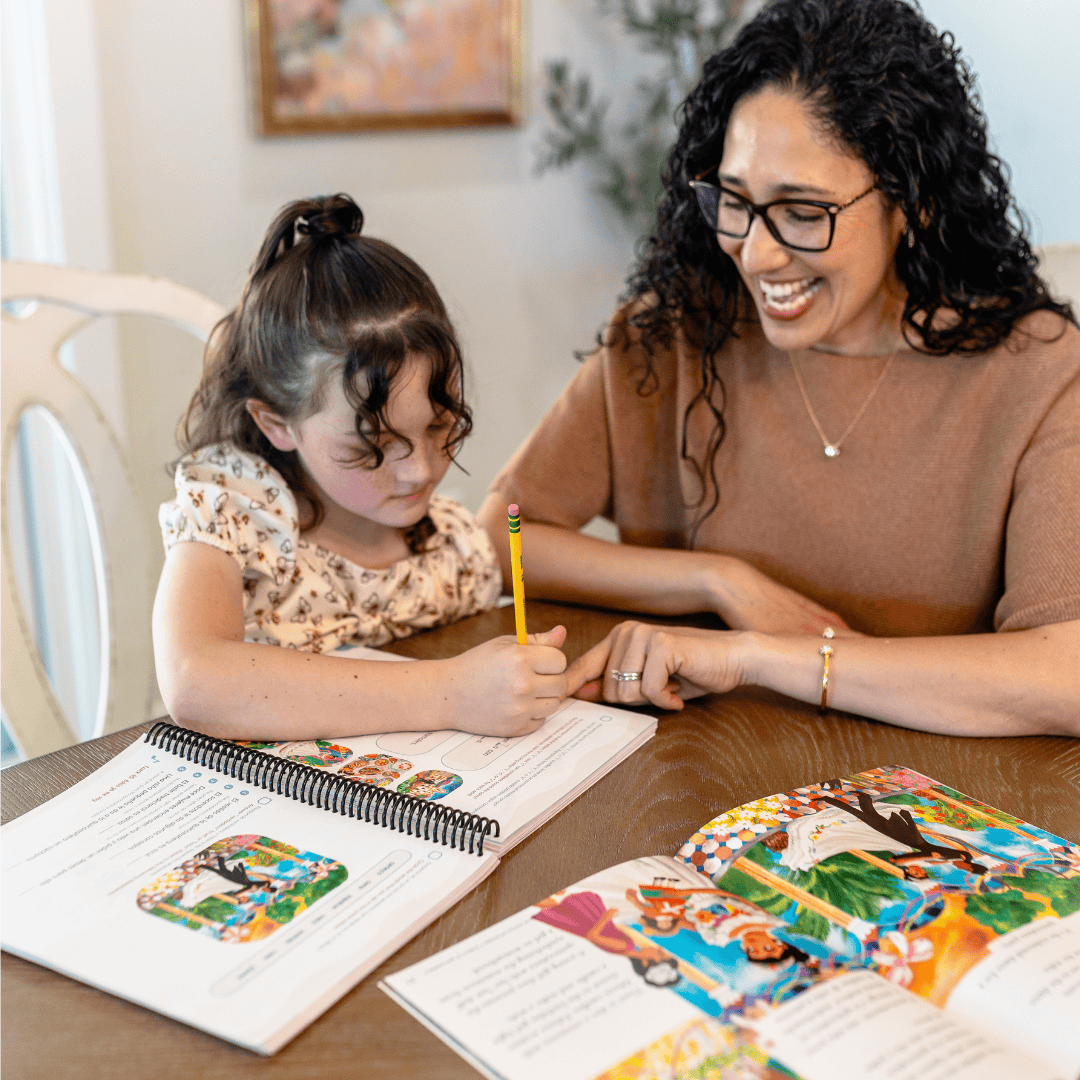
At Llamitas Spanish, we aim to give your child an authentic Spanish learning experience, and we’ve adopted many of Charlotte Mason’s methods to do this.
Whether you’re set on a Charlotte Mason Spanish curriculum or are just dipping your toes in the water, we’re here to support you. Let’s find out a bit more about how you can teach your child Spanish using the Charlotte Mason method.
Table of Contents
Who was Charlotte Mason?
Charlotte Mason (1842–1923) was a renowned British educator, known for her contributions to children’s education. Her methods paved the way for the Charlotte Mason approach to homeschooling that’s still so popular to this day.
Mason believed in educating the whole child and creating a positive learning environment to nurture children’s natural love of learning. Her holistic approach to education has a focus on liberal arts and is used to teach children in all subjects, from foreign languages to math and science.
Music, art, and literature are extremely important in the Charlotte Mason method.
She was passionate about the use of high quality literature, or what she called living books (libros vivos) in a child’s education, as well as artist and composer studies. She believed strongly in children’s ability to appreciate art and literature, saying that these types of studies feed their minds.
Related post: Living Books (Libros vivos) in Spanish
At the same time, the Charlotte Mason method allows children the freedom to pursue their own interests. Mason provided her students with a structured, teacher-guided curriculum but also encouraged self-education.
What is the Charlotte Mason Method for Language Learning?
The Charlotte Mason method for language learning incorporates a few key elements:
- A focus on speaking and listening
- The Gouin Series method
- Art, music, and literature studies
In her book Home Education, Mason also outlined some of her key principles for foreign language acquisition:
Living Speech Instead of Grammar
With Charlotte Mason language learning, foreign languages aren’t taught through grammar, but as what she called “living speech.” She placed an emphasis on experiencing language naturally and applying it to everyday actions.
Listening and Speaking First
Mason believed that children should master listening and speaking skills before even seeing words in print. This is just like how children naturally pick up their first language at a young age, before they can read.
Learning Vocabulary in Context
In the Charlotte Mason method, vocabulary should increase steadily each day—for example, about six words a day. Learned vocabulary should be practiced regularly and in sentences.
Native Speaker Pronunciation
Finally, Mason believed students should have exposure to native speakers of the target language for accurate pronunciation. This is another reason why listening and speaking before reading is so important.
The Gouin Series Method Explained
An important part of the Charlotte Mason method for foreign languages is the Gouin Series method.
This method is based on the idea that new languages should be learned in the same way that children acquire their first language.
The Gouin Series involves practicing sentences—first hearing and then speaking them—in a natural, logical sequence. This allows students to begin to think in their target language, such as Spanish.
Here’s how a Gouin Series works step-by-step:
- First, the teacher chooses a scene or scenario to demonstrate. (For example: building a fire, baking a cake, or going out for dinner.)
- The teacher speaks in short sentences—each containing a concrete action—to describe the series of events. (For example: “I drive to a restaurant. I enter the restaurant. I sit down at a table. I order dinner. I eat my food.”) Note: While stating each sentence, the teacher will act them out, using props if needed.
- Next, the teacher will repeat this process again, this time with the students performing the actions.
- The class will then practice saying each action and performing them together.
- Finally, each individual will perform the entire process on their own.
Notice that statements are kept short, must contain a verb, and follow a logical timeline. They’re also generally kept in one tense with one subject. This is a practical way to introduce new words and phrases and put them into use right away!
How to Teach Spanish the Charlotte Mason Way
Now that you know how the Charlotte Mason method for language learning works, it’s time to put it into action!
Along with Mason’s principles for language learning, studies of art, music, and poetry are also essential, and should be incorporated into a Charlotte Mason Spanish curriculum.
Some examples of Charlotte Mason Spanish activities you can use in your lessons include:
- Recitations and poetry
- Spanish songs and rhymes
- Artist and composer studies
- Living books
Related post: 70+ Useful Spanish Homeschool Phrases
Recitations and Poetry
Recitations are an important part of Charlotte Mason language learning. This is a great way to practice speaking and build understanding of the language.
The goal of this isn’t to memorize the poem, but to practice language in context. Start with short poems, keeping recitations to just a few minutes a day, so children can build their Spanish skills gradually.
In our Llamitas Spanish Curriculum, recitations are included in every unit, along with native speaker audio. For example, in Level 1 Unit 3 of our curriculum, students learn a simple memory verse called “La lechuza” (The Barn Owl) with native speaker audio:
| La lechuza, la lechuza Hace shhh, hace shhh Todos calladitos como la lechuza Hace shhh, hace shhh | The barn owl, the barn owl Goes shhh, goes shhh Everyone quiet, like the barn owl Who goes shhh, who goes shhh |
Spanish Songs and Rhymes
Music is a wonderful way to learn Spanish naturally. In a Charlotte Mason Spanish curriculum, folk songs and nursery rhymes help children to build vocabulary and learn language patterns.
Listening to authentic Spanish songs by native speakers teaches pronunciation too.
At Llamitas Spanish, we include a capella audio performances with our songs to allow your child to hear the pronunciation accurately—and so they can sing along with their focus on the sounds of the words.
Throughout all of our curriculum levels, students will learn dozens of traditional Spanish nursery rhymes and beautiful songs related to unit themes. One example is “Pajarito que canta” from the birds unit. Here’s a sample of the song with audio:
Artist and Composer Studies
Learning about great artists and composers is another important part of the Charlotte Mason method. These build not only an appreciation of art, but also their observational and Spanish narration skills as they describe the art they see.
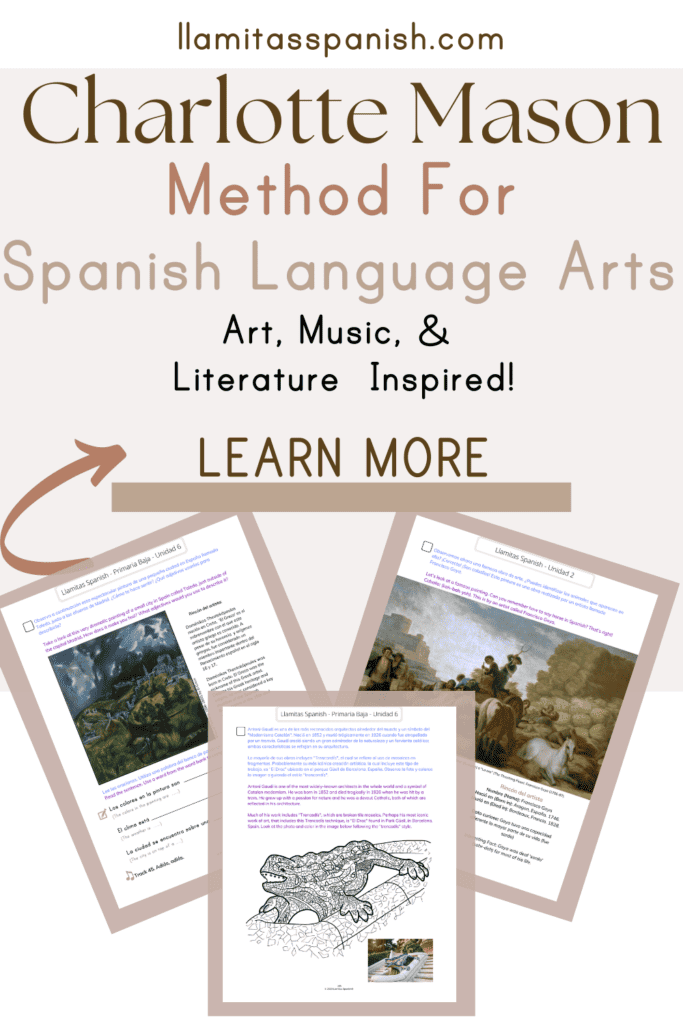
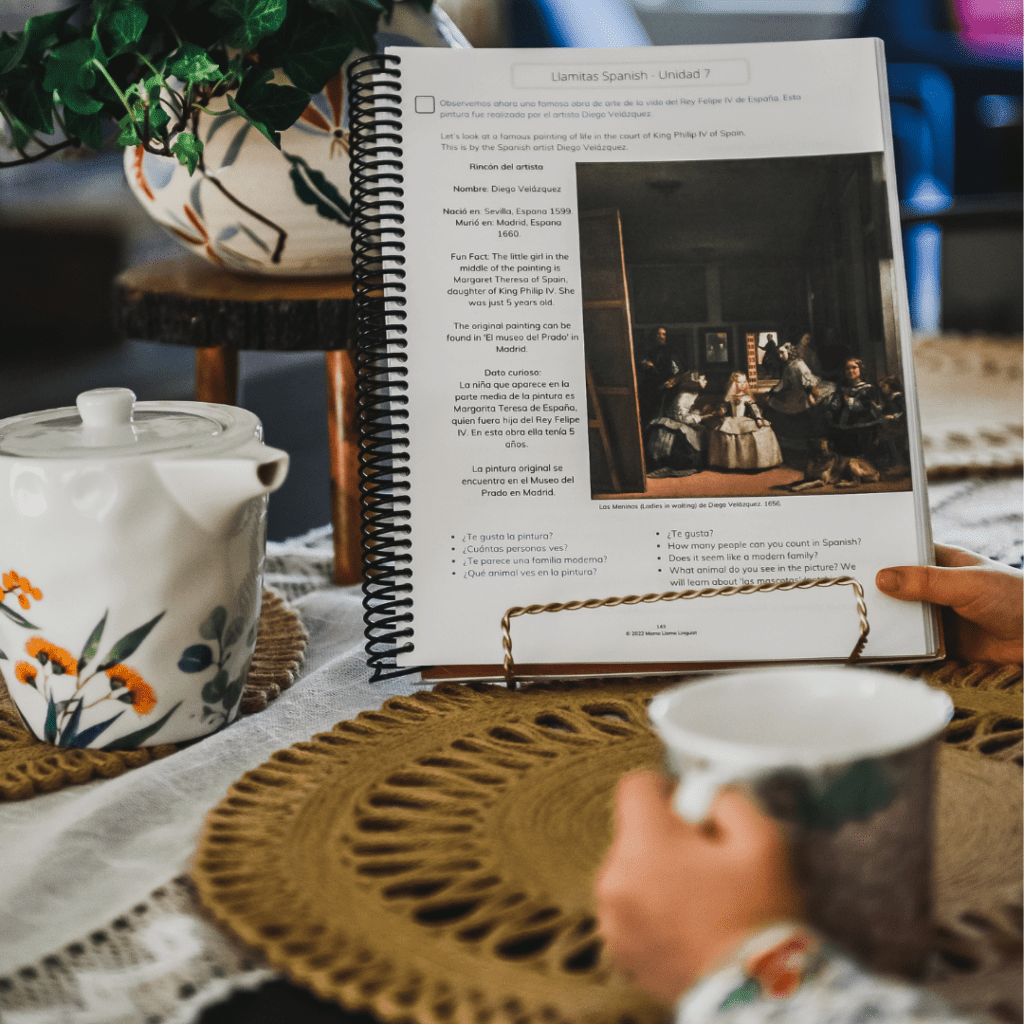
In each Llamitas Spanish unit, students study famous Hispanic artists and their work. Each obra de arte (work of art) is studied within the context of the unit’s theme, as part of our overall thematic approach to learning Spanish.
For example, students look at the work of Francisco Goya in the context of the farm, encouraging skills of observation,giving opinions, and comprehension.
In our Level 3 curriculum, students discover the work of Antoni Gaudí and are able to learn about his life and architectural work in Barcelona. They even complete their own version of El Drac, a famous landmark made with trencadís (broken tile mosaics) found in Parc Güell.
Related post: Elementary Homeschool Spanish Curriculum
Teaching Spanish with Living Books
A Charlotte Mason Spanish curriculum wouldn’t be complete without including high quality, beautifully illustrated literature—what Mason called living books. She believed these books fostered a lifelong love of reading.

This kind of high quality literature is at the heart of our Llamitas Spanish curricula.
Starting in Level 1, we have a series of short stories, along with relevant comprehension questions. In Levels 2 and 3, students dive deeper into stories through authentic anthologies that are rooted in timeless Hispanic stories, all beautifully illustrated and supported with native speaker audio.
Each story in our anthology is engaging and entertaining for young readers. Is your child interested in castles with noble steeds? Or maybe they’d be more interested in the beautiful task assigned to the hummingbird in Maya culture.
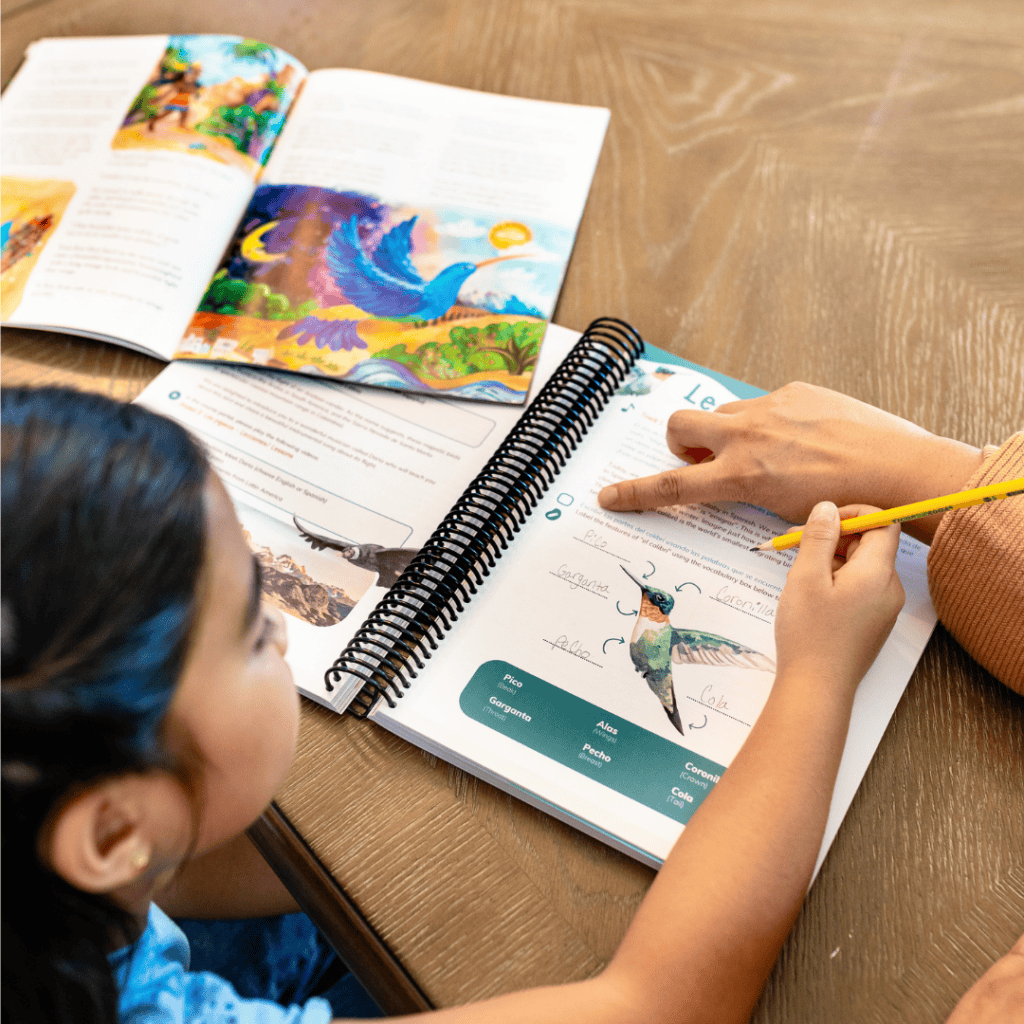
There are stories for nature and animal lovers as well, including one about pink river dolphins and the monarch butterfly’s migration to Mexico!
But these stories aren’t just fun—they’ll be learning about the values, culture, and history of Spain and Latin America. These living stories are enriched by comprehension activities, copywork, and creative writing tasks.
Related post: Supporting Biliteracy Through Elementary Spanish Stories
Charlotte Mason Inspired Spanish Curriculum for Homeschoolers
If you’re educating your children using the Charlotte Mason method and are ready to incorporate a foreign language into your homeschooling, our Llamitas Spanish curriculum makes the process seamless.

While not strictly a Charlotte Mason Spanish curriculum, at Llamitas Spanish, we’ve designed our lessons and materials with many of Mason’s beliefs and principles in mind.
Studies in art, music, and literature are at the heart of our curricula. Our wholesome, thematic unit studies allow your child to learn Spanish in context, applying it across subjects.
Even if you don’t speak Spanish yourself, our native speaker audio provides students with ample opportunities for authentic Spanish input—working those listening skills and ensuring correct pronunciation.
With these Charlotte Mason inspired methods, your child can learn Spanish naturally and put it into practice right away!
>> Learn more about Llamitas Spanish by visiting our curriculum shop!

Lydia is a freelance parenting and education writer. She previously taught English as a second language and enjoys sharing her love of language learning with her children.