
In this post: Discover the power of learning Spanish through literature with this round-up of libros vivos—living books in Spanish.
Living books in Spanish, or libros vivos, are a powerful way for children to develop language, imagination, and a love of literature.
In this post, we’ll explore what libros vivos are and why they matter for bilingual homeschool families. We’ll also share our favorite Spanish living books for kids that nurture both language and character.
Table of Contents
What Are Living Books in Spanish (libros vivos)?
Living books in Spanish (libros vivos) are high-quality literary works written in a narrative, engaging style that inspires imagination and deep learning. Rather than listing facts, they tell meaningful stories that help children absorb language, culture, and ideas naturally.
Many familias educating their children at home are familiar with the teaching methods of Charlotte Mason, a homeschooling pioneer. In the Charlotte Mason method of teaching, each child is considered a whole person—the purpose of teaching is to educate that entire person, not only the person’s mind.
She used stories she called “living books” to teach a variety of educational concepts and help children develop a love for quality literature.
Living books, or libros vivos, can include:
- Poesía (poetry)
- La literatura clásica (classic novels)
- Cuentos de hadas (fairy tales)
- Leyendas y fábulas (folktales and fables)
- Biografías (biographies)
- Relatos de la Biblía (Bible stories)
Wondering what exactly makes something a living book? Libros vivos typically share these key characteristics:
- Written by authors who are knowledgeable and passionate about their subject
- Rich in language and storytelling
- Designed to spark ideas rather than memorize facts
- High literary quality (fiction or nonfiction)
The goal of living books is to give children a holistic education. They bring ideas to life, encourage deep thinking, and help children develop a lasting love for reading and learning.
“Why in the world should we not give children, while they are at school, the sort of books they can live upon; books alive with thought and feeling, and delight in knowledge, instead of the miserable cram-books on which they are starved?”
Formation of Character, p. 291
Related post: Charlotte Mason Method for Learning Spanish
Why Read Living Books in Spanish for Language Learning?
Rather than relying on isolated lessons, libros vivos provide meaningful context for learning Spanish language arts. Through rich storytelling, children are exposed to beautiful, expressive language written by passionate and skilled authors for natural language acquisition.
This changes how children learn to read and write in Spanish.
For example, living books support Spanish learning by:
- Teaching vocabulary, grammar, and sentence structure in context.
- Developing listening, reading, and comprehension skills naturally.
- Helping children absorb language through repetition and meaningful use.
- Encouraging a love of reading instead of rote memorization.
Unlike with a traditional textbook, learning becomes magical when fascinating stories are used to teach language and grammar. Learning in this way really makes education come alive, as lessons are integrated into a child’s life experiences and imagination—creating deeper learning and a stronger connection to the Spanish language.
Llamitas Spanish Living Book: Don Quijote de la Mancha
In our Level 4 curriculum, advanced students are introduced to Don Quijote de la Mancha in a way that is perfectly designed for kids—engaging, accessible, and full of adventure.
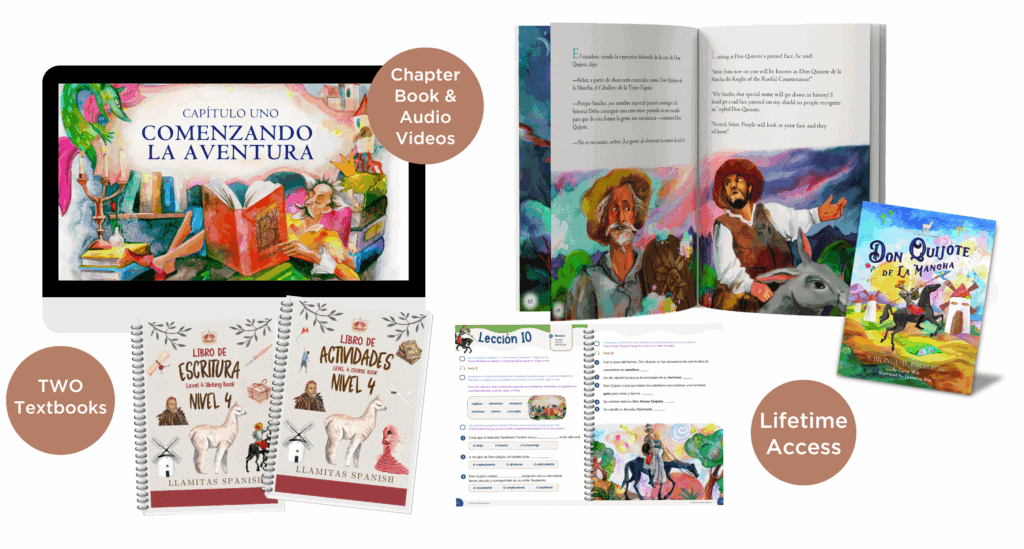
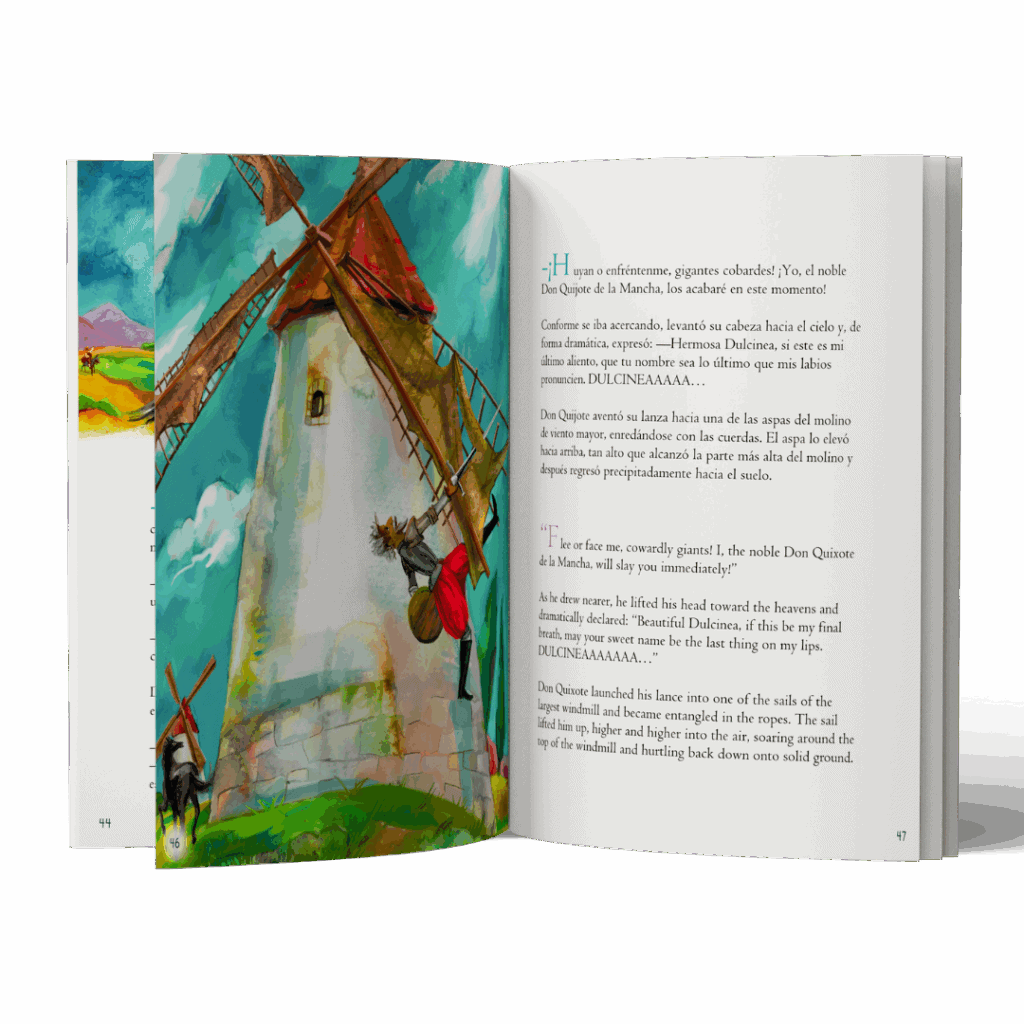
This fully illustrated bilingual adaptation brings the excitement of knights, daring quests, windmills, and loyal friendships to life while keeping the language age-appropriate and easy to understand.
Instead of feeling like an old classic, Don Quijote becomes a vibrant living book filled with humor, imagination, and action that captivates young readers.
Original Spanish Living Books
Ready to immerse your child in the beautiful world of libros vivos?
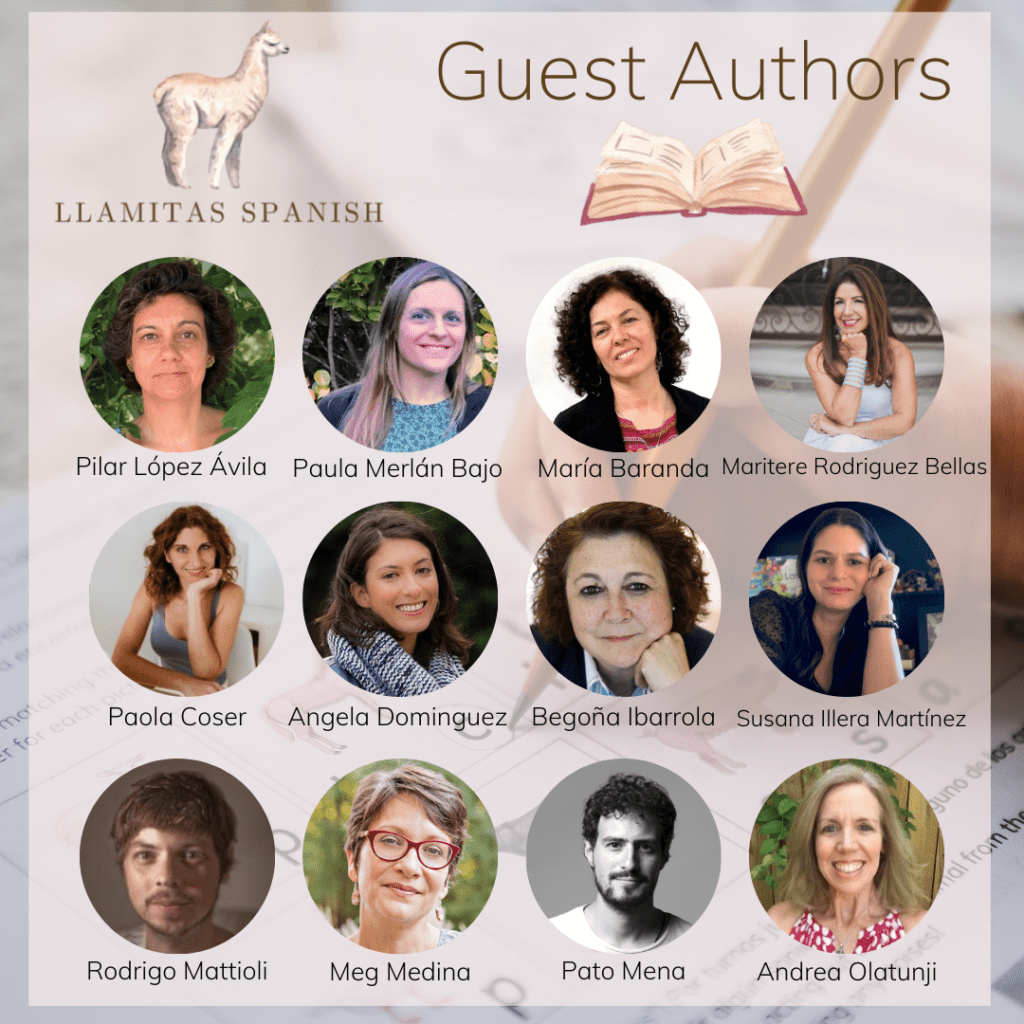
These wonderful Spanish picture books are written by Latin American and Spanish authors and are featured in our very own Llamitas Spanish Level 1 curriculum, where students can find videos with read alouds from the authors and hear about their inspiration for the stories in each unit.
Here are some of our favorite libros vivos in Spanish:
Related post: Latin American and Spanish folktales for kids
Con Alas de Mariposa by Pilar López Ávila


This beautiful story tells the tale of a grandmother and her granddaughter who develop an incredible bond through exploring nature, from the sounds of birds to the spirit of a monarch butterfly. This is an incredibly beautiful story that your family will treasure.
La Red de Inés by Paula Merlán


A stunningly illustrated story about a girl who takes home two fish she caught in her net from the ocean. Her parents tell her that she needs to return them and at night she dreams of being whisked away to the ocean in a bubble.
She experiences the life of a fish and realizes why it’s important to leave nature be. Not only that, she discovers the damage that humans are causing to the ocean through trash and pollution. This is such a beautiful story with an important message about caring from our ocean.
El mago abuelo y su chango desaparecido by María Baranda


Featured in our ‘La familia/ Family theme’ this story develops compassion and a sense of comraderie as the much loved and rather eccentric Abuelo loses his pet monkey! Follow along as they travel through countryside and afar, meeting ogres and all types of people, but nobody had seen him. Will they find his cheeky monkey?
Crisol y su estrella by Begoña Ibarrola


From our ‘El espacio/ Space theme’, In a far away place called Tierra Cristal there lived a village that spoke with the stars. This story teaches about finding courage and self belief, as a timid young boy, Crisol, makes his debut at 7 years old and chooses a star by speaking from his heart.
Un Árbol by Rodrigo Mattioli


Featured in our ‘El bosque/ Forest theme’, this story shares how a little girl called Alina decides to plant a tree. Discover how a small decision like this can turn into something powerful for our environment: like homes and shelter for animals, to food and even more trees!
This is a beautiful picture book with plenty of opportunities for your child to engage in the story by counting and naming all the animals they see.
Onsen ¿Qué hacen los monos? by Pato Mena


Featured in our Safari unit is this brilliant true story about curious monkeys living in the mountains. Discover through rhythmic and comical storytelling all the many activities they get up to and ‘monkeying around’.
María tenía una llamita by Angela Dominguez


For our ‘La granja / Farm theme’, we feature this stunning and authentic take on the traditional nursery rhyme ‘Mary had a little lamb’. Explore María’s neighborhood in Peru in this rhythmic, sing-along story!
Omar el jaguar by Andrea Olatunji


A truly authentic and beautifully illustrated story from our ‘La selva/ jungle’ unit, Omar the jaguar doesn’t want to make friends with animals that do not look like him. That is, until he understands the true beauty of diversity and friendship!
Classic Living Books Translated into Spanish
Classic literature in translation can also be a great way to experience living books. Check out these quality titles translated into Spanish:
El jardín secreto / The Secret Garden


Of course, there are often Spanish translations of classic living books like The Secret Garden. These are truly timeless stories and perfect for independent readers and advanced level Spanish speakers.
Telaraña de Carlota / Charlotte’s Web


A must-read for bilingual families! This classic children’s novel takes place on a farm and follows a young girl, her pig Wilbur, and a spider. It tells an important story about friendship and self-sacrifice.
Related Post: Spanish Chapter Books for Kids
Con calma


This is a gorgeous collection of nature stories in Spanish. Discover the hidden wonders in nature and get your kids outside to inspire their curiosity.
Libros vivos in Llamitas Spanish Curriculum
For families raising bilingual children, our Llamitas Spanish Curriculum provides a complete Spanish language arts curriculum. Each of our open-and-go curricula levels incorporate many of Charlotte Mason’s methods, including the use of literature and living books in Spanish.
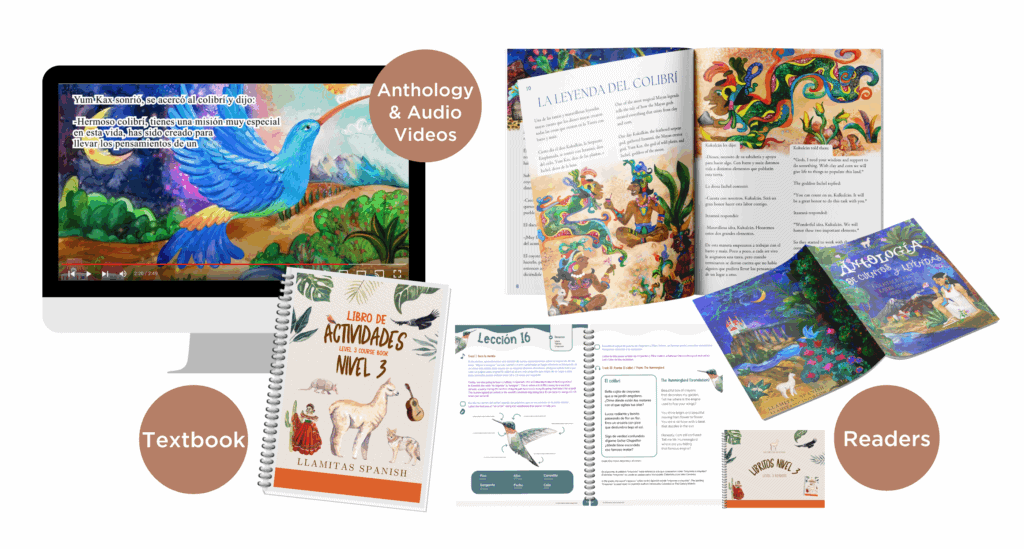
These homeschool Spanish lessons are rooted in authentic and rich literature, featuring wonderful resources like:
- Immersive short stories in Spanish with native speaker audio
- Book menus for each unit, so you can enhance learning with thematic storytimes
- Guest author read-alouds (in Level 1), where students meet and hear the stories of 12 famous Latin American and Spanish authors
At Llamitas Spanish, children learn and study the Spanish language naturally, through colorful stories, nursery rhymes, and recitations that truly bring the language to life.
Related posts:
Latin American and Spanish Folktales for Kids
Supporting Biliteracy Through Elementary Spanish Stories
Here’s Why Thematic Spanish Lessons for Kids Actually Work
Maya is an artist and freelance writer from Cuba who has worked in Art Education, Language Education, Simultaneous Interpretation, Subtitling, and Literary Translations. She is also a Mom and Abuela, committed to providing resources for homeschooling parents (such as her own daughter!) and to all who value the conservation of her beautiful, native Spanish language.