

In this post: Discover 8 tremendous benefits to growing up bilingual, especially from an early age.
Raising bilingual children offers powerful benefits at any age—from cognitive advantages that affect memory and long-term brain health to academic success, more opportunities, and even social-emotional development.
Bilingualism is a gift that your child will carry with them throughout the rest of their life. Keep reading to learn 8 of these amazing research-backed benefits of bilingualism!
Looking for a comprehensive curriculum to help you raise a bilingual child? At Llamitas Spanish, we’re passionate about supporting parents who want to give their child the lifelong gift of bilingualism.
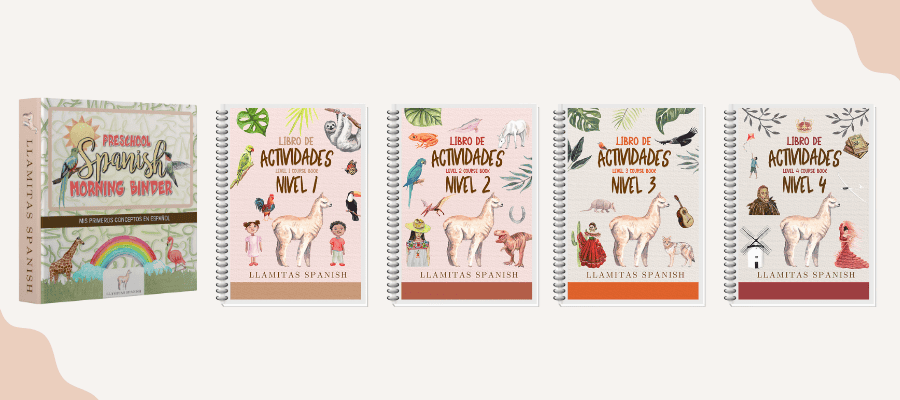
Our authentic and award-winning Spanish curriculum includes levels for Preschool through Elementary grades. Visit our shop today to learn more.
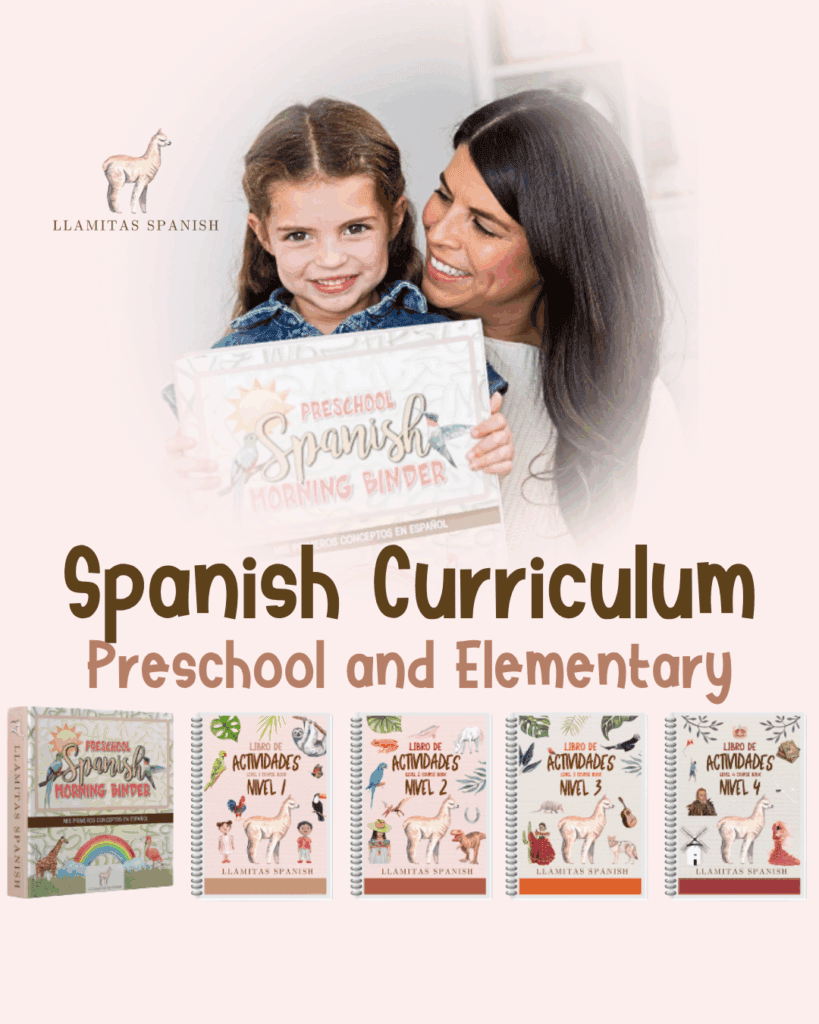
Table of Contents
Why Bilingualism Matters
Bilingualism benefits society by facilitating cross-cultural communication, while positively affecting cognitive abilities in individuals.
In the United States today, per the US Census Bureau, about 22% of children over age 5 live in bilingual or multilingual households. The language most often spoken in the U.S. after English is Spanish, with over 41 million Spanish speakers extending from California to New York.
In an age when global communication and worldwide travel have become the norm for many of us, bilingualism is becoming a way of life for a large number of people around the world. And there are definite advantages to being bilingual.
What Does it Mean to be Bilingual?
Bilingualism is simply defined as the ability to speak two languages. This means being able to distinguish and maintain the correct vocabulary, grammar, and phonetics for each language, even while switching between them.
There are two main types of bilingualism:
- Sequential or successive bilingualism (a second language is learned after the dominant language is established)
- Simultaneous bilingualism (two languages are learned at the same time from an early age)
Whichever way bilingualism happens, the result is that effective communication is possible in two different languages.
Related post: Sequential vs Simultaneous Bilingualism: What’s the Difference?
How Common is Bilingualism?
More than half of the world’s population is estimated to be bilingual, according to data from UNESCO. And that number continues to rise. In the United States, research shows that the bilingual population practically doubled between 1980 and 2020.
While many countries actually have more than one official language, only about 20% of the U.S. population is bilingual. This makes monolingual native English speakers a minority in the world.
8 Benefits of Being Bilingual
Studies have documented that bilingualism has numerous benefits. Here are just 8 of these amazing advantages:
1. Bilingual People Do Better in the Job Market
Bilingual people are more desirable on the job market and more likely to be promoted to positions that require international travel. Studies also show that they are often compensated for their language skills.
Some research suggests that bilingual employees earn between 5–10% more hourly than their monolingual counterparts.
Another study conducted at MIT found that college graduates working as bilingual professionals earn about 2% higher wages on average than their monolingual peers, which translates to about $67,000 additional savings.
Bilingualism is particularly valuable in careers such as:
- International business
- Education
- National security
- Public health
- Tourism
- The military
Of course, bilingualism is essential for careers in interpretation, translation, and foreign language instruction.
2. Bilingual Students Do Better in School
Many studies have confirmed that being bilingual results in improved cognitive development from a young age.
Bilingualism in children has also been linked to:
- Improved attention span and focus
- Stronger cognitive abilities and vocabulary
- Enhanced conflict management
- Flexibility and quicker adaptation to new environments
These advantages of bilingualism improve learning abilities both at school and in daily life!
Check out our FREE Spanish Resource Library with printable, screen-free materials, music, games, and much more! We add new content every month to help your little linguist become fluent in Spanish faster!
3. Bilingualism Improves Memory
Bilingual individuals score higher than their monolingual counterparts when presented with tasks that require the use of memory. These include:
- Planning
- Problem solving
- Recalling information such as names, directions, instructions, and items on a list
According to Dr. Jubin Abutalebi, a neuropsychologist at the University of San Raffaele in Milan, brain scans also reveal that bilinguals have more gray matter in the anterior cingulate cortex than monolinguals. This provides protection against the cognitive decline that affects memory in aging adults.
4. Bilingualism Expands Cultural and Social Opportunities
Language is how we connect with others, and a huge advantage of bilingualism is that it opens up the world to us even more.
For example, bilingual children can:
- Make new friends with people who speak Spanish or another language
- Enjoy Hispanic and Latino culture, like books, music, movies, and plays
- Experience more meaningful and immersive travel
- Navigate new places independently (ordering food, asking for directions, etc.)
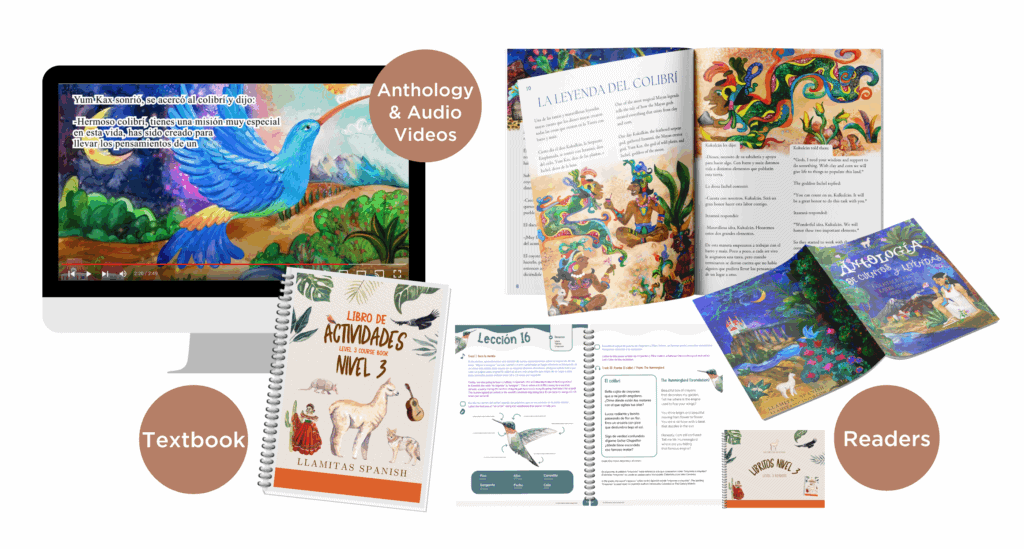
Get to know some Spanish and Latin American folktales in our Level 3 curriculum that will help your child develop a better understanding of Hispanic/Latino culture while they study Spanish!
5. Bilingualism Boosts Confidence!
Bilingualism also makes people more self-confident. Being able to communicate in two languages helps children:
- Take healthy risks
- Build communication skills
- Strengthen self-esteem
- Move more comfortably through the world
These skills naturally develop throughout the process of learning a foreign language.

6. Bilingualism Enhances Long-term Neurological health
Many studies have found that bilingualism seems to enhance brain health. Research shows that bilingual people typically take an average of 4.5 years longer than monolingual people to develop dementia.
While bilingualism doesn’t prevent the disease, increased gray matter in the brain developed as a consequence of speaking two languages helps to ward off neural deterioration.
Another study from the American Heart Association found that bilingual stroke survivors recovered their speaking abilities twice as quickly as their monolingual counterparts.
7. Bilingual People are Better at Multitasking
Bilingual people are highly skilled at switching between their two languages, which leads to better multi-tasking in other contexts.
Research shows a bilingual advantage in other areas related to multitasking, including:
- Task-switching
- Reaction time
- Executive control
The ability to switch between two languages enhances an individual’s ability to switch between two different tasks, as both trigger similar networks in the brain.
8. Bilingual People are More Empathetic
An advantage of bilingualism that goes beyond personal gains is that it actually helps us to become kinder, more empathetic people. Bilinguals are:
- More likely to understand others’ perspectives
- Less likely to rely on their own belief system to understand others
- Better at “reading” others’ emotions
- More attuned listeners
Bilinguals also often demonstrate better conflict-management and inhibitory control than monolinguals.
Related post: Expressing Feelings and Emotions in Spanish
Common Myths About Bilingualism
In the past it was thought that speaking more than one language confused children and hindered their academic and intellectual development—particularly in the pre-school years while building essential language skills.
However, a plethora of studies have now demonstrated that there are tremendous benefits to growing up bilingual, especially from an early age. These include cognitive development, social-emotional skills, neurological health, and long-term success.
Related post: 10 Myths about Raising Bilingual Kids
Giving your Child the Bilingual Advantage
The benefits of being bilingual extend from early childhood to old age, and your child’s entire life will be improved by this advantage. In addition to the demonstrated cognitive and =-neurological benefits, your child will also enjoy valuable social benefits from being bilingual.
Here’s a quick breakdown of the benefits we’ve already covered, at a glance:
| Bilingualism Benefit | What This Means |
| Cognitive Development | Improved memory, focus, mullti-tasking, and problem-solving abilities |
| Social & Emotional Growth | Greater empathy, self-esteem, and confidence; better communication skills |
| Neurological Health | Delayed symptoms of Alzheimer’s and dementia; improved and cognitive function memory in elderly |
| Long-term Opportunities | Wider range of career options, higher earnings; more travel and cultural opportunities |
To help you get started on your family’s bilingual journey, we’ve created open-and-go Spanish curricula products to make the process easy! Explore our curricula levels and our Freebie Library that you can use to make learning Spanish more fun and interactive for the whole familia!

Maya is an artist and freelance writer from Cuba who has worked in Art Education, Language Education, Simultaneous Interpretation, Subtitling, and Literary Translations. She is also a Mom and Abuela, committed to providing resources for homeschooling parents (such as her own daughter!) and to all who value the conservation of her beautiful, native Spanish language.