

In this post: Learn 5 easy Montessori parenting principles that will encourage your child’s development and create a more peaceful home.
Wondering how to get started with Montessori at home?
In our guide, you’ll learn 5 simple Montessori parenting principles you can use right away—from setting up child-friendly spaces to handling toddler tantrums calmly.
These practical tips will help you raise independent, curious, and cooperative kids using Montessori methods at home.
Table of Contents
How to Set Up Montessori Spaces at Home
Do a quick search on Pinterest for “Montessori playroom” and you are immediately overwhelmed with beautiful, organized, and minimalist shelves with gorgeous wooden toys and a sense of harmony. But then you glance over at your hot mess of a toy bin and think…but where do I start?
You start. That’s it. Take it one toy at a time.
There are many approaches you could take, but here are a few points to keep in mind:
- Montessori toys teach one skill. They are closed-ended. Ask yourself, “How does this toy serve my child?”
- Keep it simple. Noisy toys can overwhelm children’s senses. While flashy toys can be tempting, simple toys encourage more creativity.
- Remember that less is more. You have to declutter. Maybe you’ve heard the expression “cluttered home, cluttered mind”—and there are actually studies that support this!
Here are a few more tips to help you get started setting up a Montessori home:
What does a Montessori home setup include?
A Montessori home setup should include low, accessible shelves, simple toys, and organized spaces that allow children to choose and return activities independently.
Do I need special Montessori toys to get started?
No! You can start with what you already have. Montessori focuses more on how toys are presented and rotated than on buying specific materials.
How do I start setting up a Montessori space on a budget?
Start small by decluttering, creating a few accessible shelves, and rotating toys instead of replacing everything at once.
Related post: Screen-Free Spanish Resources for Kids
How to Encourage Independence with Montessori
Of course, the purpose of a Montessori home isn’t just creating an aesthetically pleasing space. By setting up your home this way, you can actually encourage your child’s independence.
Here are some ideas you can use in the different areas of your home:
Mudroom
We know from experience that this can be a disaster zone. And if you don’t have a beautiful mudroom like some homes do, don’t worry—you can get creative!
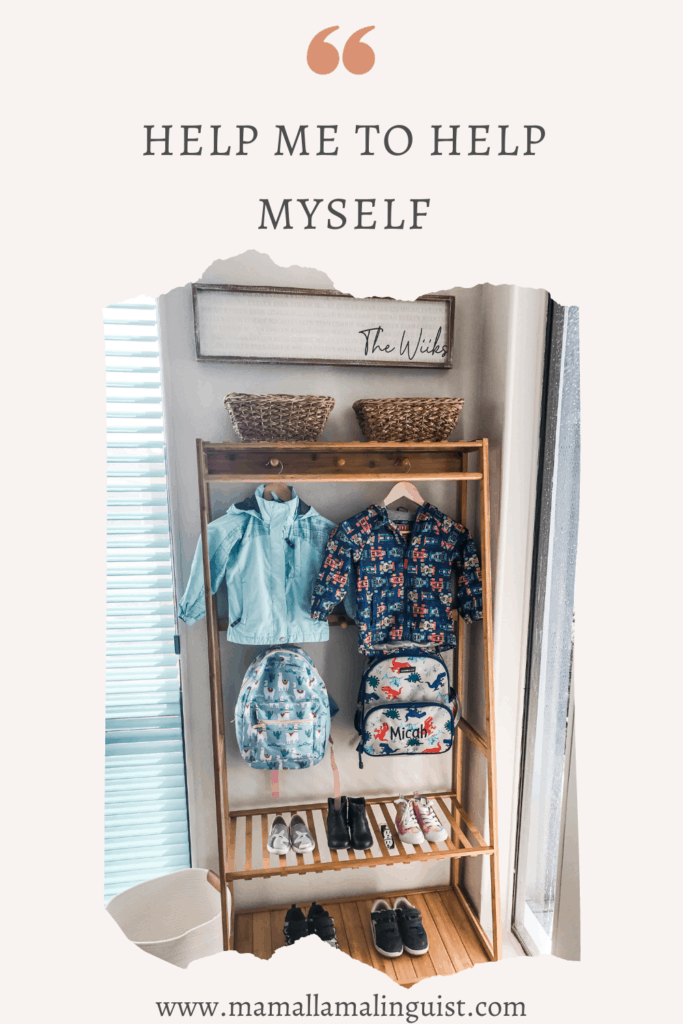
The most important concept is to create a zone that follows Maria Montessori’s advice: “Help me to help myself.”
In the mudroom, this means providing your kids with the opportunity to access their coats, shoes, and backpacks with little assistance, thus encouraging their independence!
A simple shoe rack with storage and hooks can be a great, multi-purpose solution.
The kitchen is a great place for kids to explore their independence. They can begin pouring their own drinks and making simple snacks at a young age—even as toddlers!
By adding an easily accessible tray with a water jug and cups to your kitchen, your kids can pour themselves a glass of water whenever they want. Just be ready for some occasional spills!
Playroom
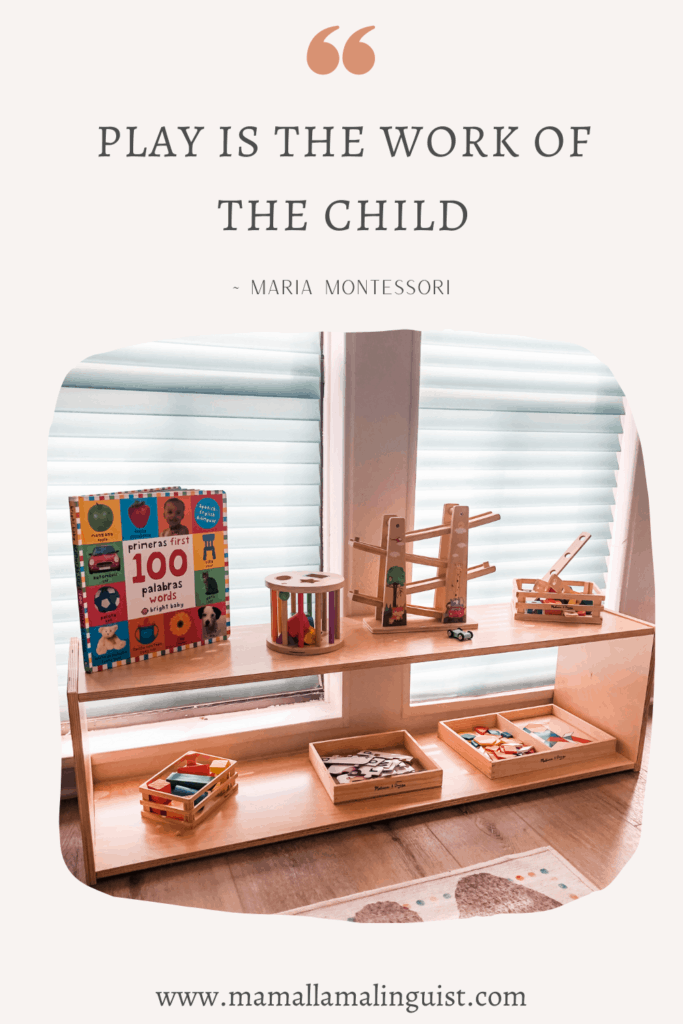
Having a low shelf with activities organized into baskets really allows for independent discovery play. It also encourages them to put away the activity once they are done if everything has its own place.
Self Care Area
You can also create a small but practical self care nook—by the bathroom is a great option. This gives them an easy way to look in the mirror and brush their hair, wipe their nose, or do a quick check before loading up in the car.
Related Post: Montessori Language Development
How Montessori Encourages Curiosity and Exploration
Maria Montessori used to carry a set of rosary beads that she would count before intervening (unless the child was in danger of course). Maybe you don’t have beads, but we can all learn to stand back.
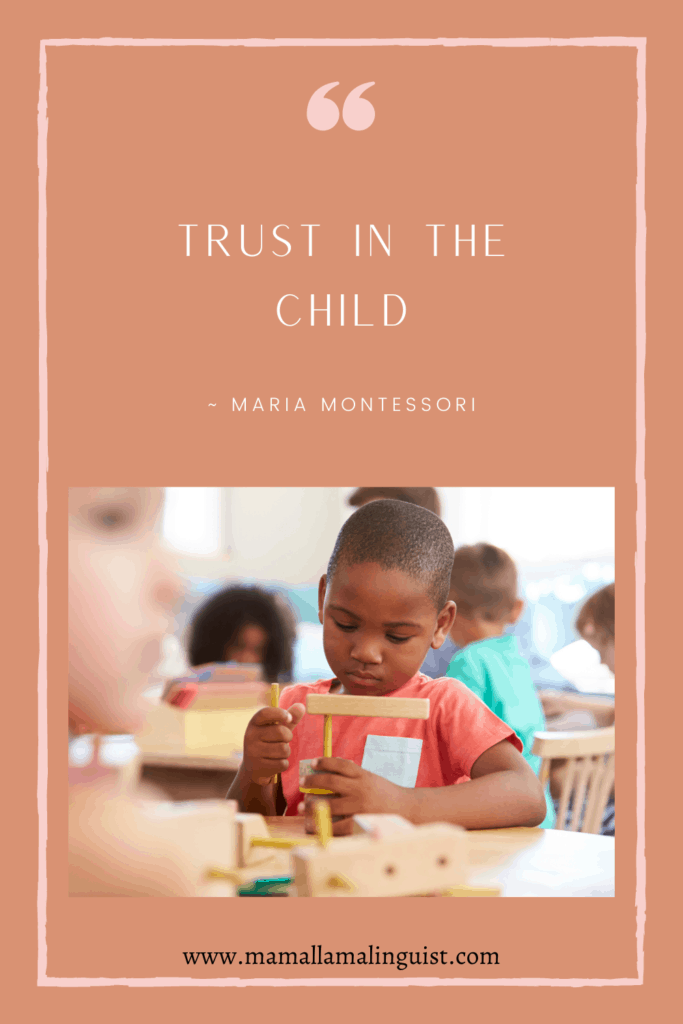
It’s tempting to try to control what your children are doing to fit your expectations. But with Montessori, you have to learn to trust your children—they already know how to explore and learn.
As long as you’ve created a safe and rich environment, then you can let go of control.
‘We can trust that they are developing along their unique path, in their unique way, on their unique timeline.’ -Maria Montessori
This might also mean adjusting your concept of time. For our children to truly explore, discover and learn, they need time. Instead of hurrying them along during a nature walk or at the science museum, learn to slow down.
To do this, keep these Montessori inspired tips in mind:
- Be the observer—let the child lead
- Slow down—their pace not yours
- Encourage exploration by providing hands-on activities
Montessori Discipline: How to Handle Toddler Tantrums
Although encouraging independence is essential to implementing Montessori at home, it’s also important to set limits. While this might sound contradictory, setting limits helps build respect. The key is setting them in a loving and supportive way.
Children need routines and they need order. They need to know that there are limits to thrive and feel secure.
If you have a sassy toddler, we’ve been there and know how hard it can be to handle discipline. At this stage, they’re still unable to express their feelings with words, which can often lead to toddler tantrums. This is totally normal.
The great news is that the Montessori at home method can help you keep the peace. Here are our top tips for managing toddler tantrums the Montessori way:
- Help them calm down (cuddle or provide a safe space).
When toddlers have tantrums, the rational, decision-making part of the brain shuts off. So instead of trying to talk it over, you need to calm them down first.
2. Don’t “just ignore” them!
We know how embarrassing it can be when your child is acting out in public—we’ve been there! Yes, it’s frustrating. But they need connection: Look them in the eyes, tell them you are there, and ask if they need a hug. If they refuse, remain close to monitor their safety. Try again when they calm down.
3. Create a calm space.
A good option for this is their bedroom. When they need to calm down, suggest they go and relax in their rooms. Don’t use the word “time out” or lock them in. Instead, keep the door open and encourage them to rest until they are ready to join in again.
4. Teach peace-making.
Finally, it is really important to develop an ethos of respect. Encourage your children to apologize without forcing it. You can model this with your language use—show them how to apologize sincerely and take responsibility: “I’m so sorry (name) hurt you. Hitting is not OK. Can you forgive him?”
How to Encourage Cooperation with the Montessori Method
It’s so tempting to bribe our kids into cooperating. We get it—we’ve all done it.
Sometimes, when your child is screaming and throwing a tantrum, giving them a treat might seem like the only solution. But this often leads to more problems down the road, and more work for you—it basically teaches them they only have to obey rules if they get a treat.
“If you’ve told the child a thousand times, and the child still has not learned, then it is not the child who is the slow learner.” –The Montessori Toddler
Bribes or threats get the child to cooperate out of fear or rewards. They’re a quick fix, not a long term developmental strategy.
How do I get my toddler to cooperate without a power struggle?
The best Montessori parenting principle for encouraging cooperation is to involve the child. Help your child take ownership and include them in resolving the issue.
For example, you could say: “You don’t want to get in the car seat, but mommy needs to drive home. I wonder how we can solve this problem?” Or: “You don’t want to get in the car seat, but how else can we go home?”
If they continue to refuse to cooperate, you use gentle hands and verbalize your actions: “I’m going to put your arms through the straps. You are resisting but this is very important to keep you safe. Now I’m going to secure this buckle.”
Another method is using charts. For example, a morning routine chart where the child can check off their tasks. If they can’t read, you can use pictures instead. This also helps them feel a sense of ownership over their activities.
Bring Language Learning into Your Montessori Home
If your goal is raising curious, independent learners, introducing a second language can be a beautiful extension.
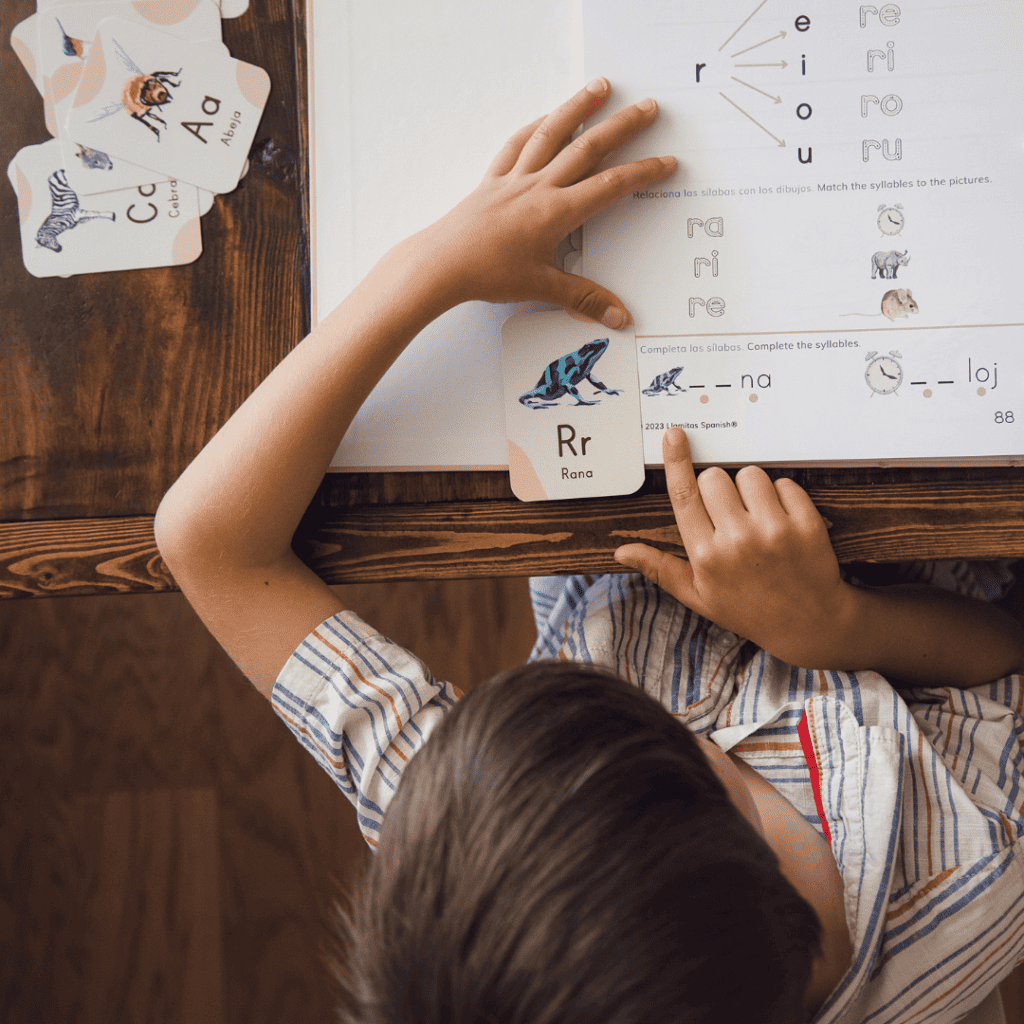
At Llamitas Spanish, our Montessori-inspired curriculum is designed for homeschool families who value gentle, child-led learning.
Beginning with the early years, our open and go Spanish curriculum levels were designed to grow with your child all throughout the elementary grades and beyond. Check out our offerings in the curriculum shop today!

Founder of the Llamitas Spanish® Curriculum and former Spanish teacher. Corrie holds two Master Degrees in Spanish and Education. She lives in San Diego, California with her husband and two bilingual children.