

In this post: Learn different ways to say ‘I love you’ in Spanish for expressing love and friendship
Valentine’s Day is coming up and maybe you are wondering how to say “I love you” in Spanish for romantic love, close friendships, or family. You’re in the right place!
There are different verbs and phrases for love in Spanish with subtle meanings, so choosing the right one is important. In this guide, you’ll learn 10 ways to say “I love you” in Spanish and when to use each one.
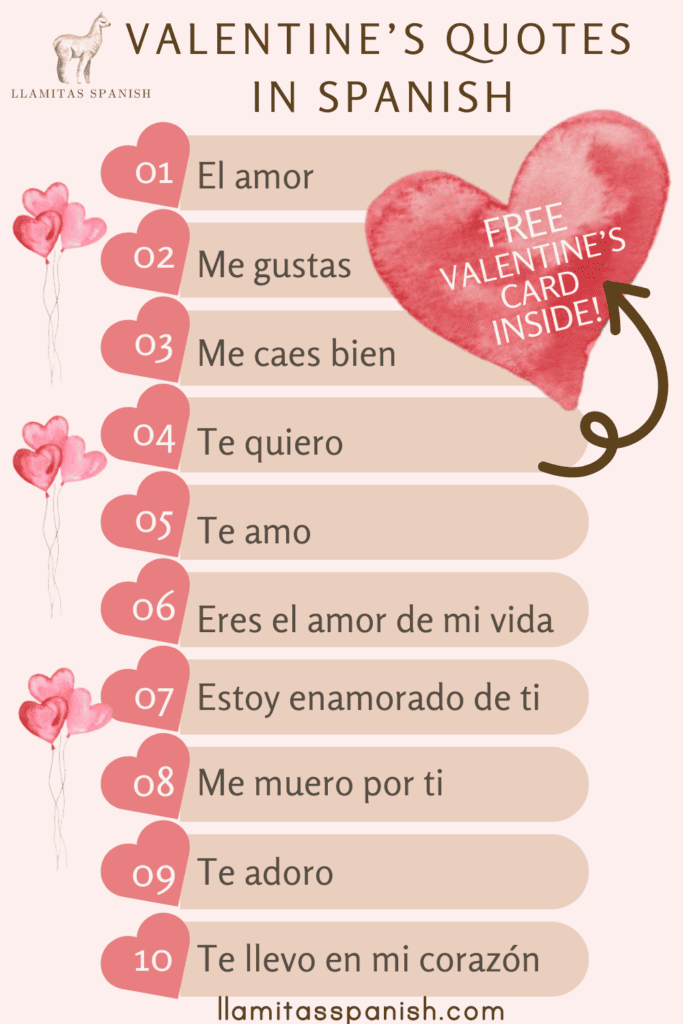
10 Ways to Say “I Love You” in Spanish
Looking for different ways to say “I love you” in Spanish? There are many verbs and phrases you can pick from, but all have a slightly different meaning.
For example, do you want to express romantic love? Or perhaps more a friendship type of love?
Here you will find some basic phrases to express the right level of affection:
| Spanish Phrase | English Meaning | Best For |
| El amor | Love (noun) | General use |
| Me gustas | I like you | Romantic interest |
| Me caes bien | I like you | Friends |
| Te quiero | I love you | Friends, family, partner (casual) |
| Te amo | I love you | Spouse, serious partner (deep affectionate love) |
If you’re looking for a more creative way to express your love, try one of these love phrases in Spanish:
| Spanish Phrase | English Meaning |
| Eres el amor de mi vida | You are the love of my life |
| Estoy enamorado/a de ti | I am in love with you |
| Me muero por ti | I die for your love |
| Te adoro | I adore you |
| Te llevo en mi corazón | You’re in my heart |
Te quiero vs te amo
If you’re wondering what the most common way to say “I love you” in Spanish is, you’ll likely come across two answers—te quiero and te amo. To avoid any awkward situations, you’ll want to learn the difference between these two phrases!
The biggest confusion often comes with these two Spanish verbs that are both used to express love: ‘querer’ which literally means ‘to want’ and ‘amar’ which means ‘to love’.
So, which is the best one to use? It depends on the situation.
Te quiero meaning
‘Te quiero’ is most appropriate for expressing love to family or friends. It is more casual and less romantic.
Best used for:
- Extended family like cousins, aunts, and uncles
- Close friends
- Girlfriend or boyfriend
Can you say “te quiero” to a boyfriend or girlfriend? Absolutely! Even though it’s more casual and less romantic, “te quiero” is a very common way to say I love you to a boyfriend or girlfriend in Spanish.
Te amo meaning
‘Te amo’ is most appropriate for expressing love in a deep or romantic way. It is for people that are closely connected to you and with whom you have a serious relationship.
Best used for:
- Immediate family like mom, dad, and siblings
- Spouse
Is “te amo” too strong for some relationships? “Te amo” is definitely reserved for more serious, deep relationships. Most stick with the more versatile “te quiero” for casual situations.
Valentine’s Day Spanish Lessons
If you love thematic learning and seasonal resources as much as we do, then explore our curriculum shop at Llamitas Spanish.
We have a Valentine’s Day unit for Preschool and Elementary ages as part of our Holiday and Seasonal Bundle that we think you will LOVE!
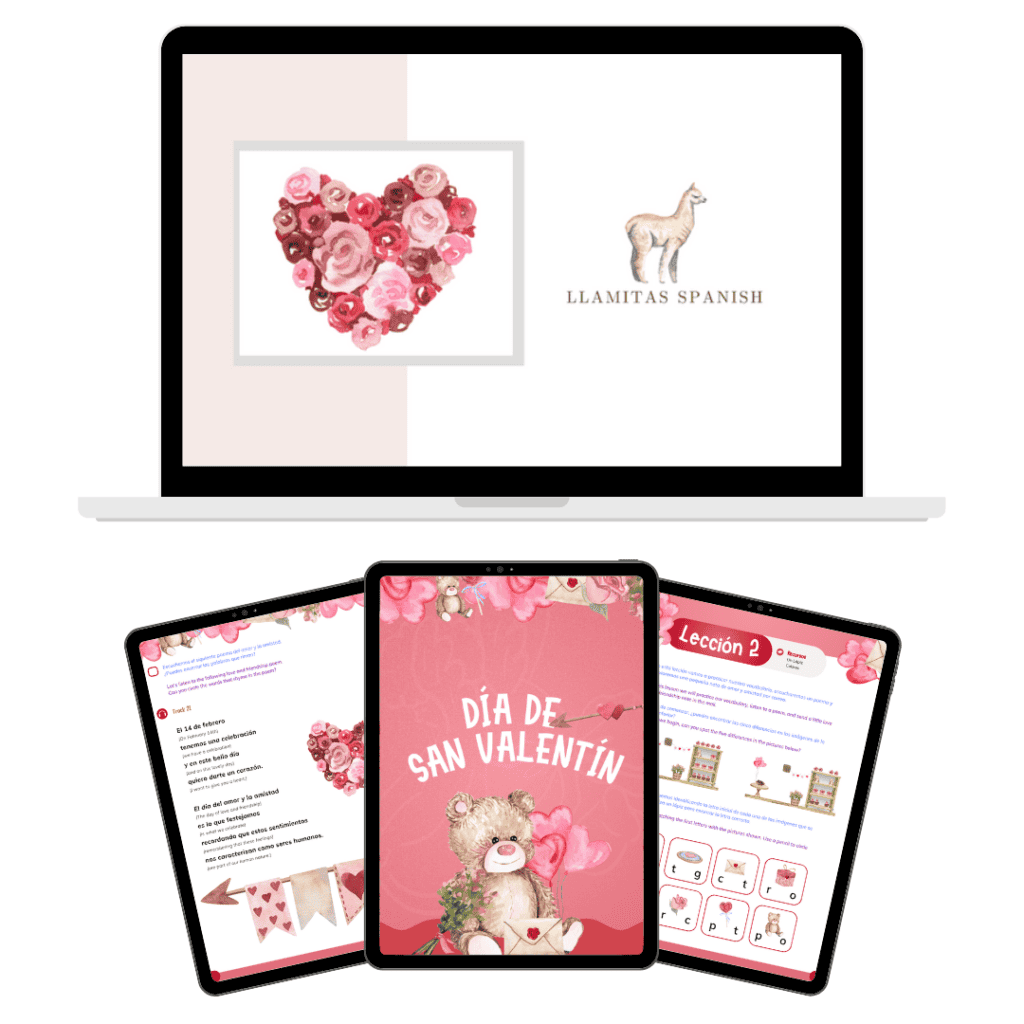
Included in the unit are:
- Valentine’s day printables to learn Spanish vocabulary
- Valentine’s vocabulary themed games
- A love song that mothers can sing to their children
- A sweet poem
- and even a love and friendship note that you can send to loved ones
Your children will have so much fun celebrating Día de San Valentín with these Spanish lessons!
More Valentine’s Day Posts:
Top 10 Spanish Valentine’s Day Songs for Kids
24 Spanish Children’s Books about Love and Friendship
Authentic Spanish Love and Friendship Poems

Founder of the Llamitas Spanish® Curriculum and former Spanish teacher. Corrie holds two Master Degrees in Spanish and Education. She lives in San Diego, California with her husband and two bilingual children.